


How To: 3bar MAP tuning the LSJ


Thread Starter
Banned
Joined: 02-23-06
Posts: 1,287
Likes: 0
From: Mo-town, WV
How To: 3bar MAP tuning the LSJ
So in light of the fact that our cars “can’t fuel properly above 17psi” and the recent comings of turbo kits and bigger blowers and such, I decided there has to be an easy way around fueling these cars properly. I thought I had it perfect with my Harrop, using the VE table for most fueling, with the MAF table perfectly dialed in. The MAF table would finish off the rest of what I needed to account for fuel wise. Then I dropped to a 2.6” pulley on the Harrop and all hell broke loose. I started over running my MAS frequency wise so bad by redline that the car would freak out and go super lean. Of course I could put it in a bigger than the stock 3.25” housing, but then it’s still a band-aid fix because the MAF table is not proper fueling for the car. It doesn’t account for any air in the manifold, runners, blower inlet, anything after the throttle when it is closed. This causes a slight hesitation between shifts. Plus the MAS is subject to all kinds of thing like water, filter oil, dirt, etc.
So I started thinking outside the box and of course a full speed density standalone was the first thing that came to mind. I’m just a stickler for a perfect tune and hate driving on anything less. But if I’m going to offer a solution to the entire community, a standalone is out of the question for 99% of the people. Rather than trying to work outside the box of the stock PCM, why not work within its “limits”? Since the stock VE table runs out at 215kPa/6800rpm, it seems you are limited to controlling fuel up to about 17psi worth of boost. But what if I’m running 27psi like I see with the Harrop? Well previously you would just raise the last values enough so it wouldn’t lean out too much by the top end. This is obviously the half assed way to do that.
The next problem is that the MAP sensor in my manifold maxes out about 22.4psi by just 5500rpm, my boost gauge tells me I’m running much higher than that. What to do? Obviously the first step is to obtain a MAP sensor that can read to that level. GM Part number 12223861, a 3 bar MAP sensor good to ~29psi, will do just that. So I wire it in to my stock MAP sensor signal line, tapping the ground reference and 5V feed from that sensor, making sure the IAT2 sensor in that housing is still getting signal to spit out its information to the PCM.
This is great because now the MAP sensor can read the boost, but the PCM is all out of whack now. When I’m at 20psi, it only sees about 16psi. Well crap this is working backwards. Not so much, HP Tuners was kind enough to include the MAP sensor calibration parameter under the Engine Diagnostics > Airflow tab. So I tell the car that 5V from the MAP sensor is actually just 215kPa instead of 300kPa, allowing me to fully utilize the stock VE table. Having x-axis cells every 6kPa, this table has plenty of resolution to cut it down by about 25%. So now everything in the PCM has changed to read lower.
At this point we must tell the VE table that things are not what they were before. According to the new scaling, the values that you used at say 100kPa in the manifold, are now actually being read by the computer at around 70kPa. At 200kPa in the manifold, you now have the computer thinking 140kPa. 300kPa in the manifold, the computer sees around 210kPa. See the issue? You now have to make a brand new VE table. It’s not hard with time and patience. A good base to start is to shift your already dialed in rows over to the left a few so that this works properly. But this goes for everything in the car that is pressure based. IFRs, Injector latency (offsets), Timing is based on calc cyl mass and this is a BIG one because as you go lower in airmass in the timing tables your timing gets higher so be sure to drop the lower values to accommodate.
But won’t the MAS interfere? Nope! Just set your MAF fail Hz to 0 and the car will act like it’s not even reading it, leaving fueling solely in the hands of the VE table. To be honest I don’t even have the MAS hooked to my PCM. The signal wire is cut to the PCM. This I feel is the best way to properly get this done.
Next up is logging. You have to keep in mind that your new MAP is not reading correctly so when your scanner says 165kPa, you are used to that being maybe 10psi. Now it’s actually closer to 20. So I modified the Boost PID to look something like (([SENS.11]-10)/1.8)*2 if I recall. This will end up putting 70kPa right around 0psig, 140kPa right around 14psig, etc. If I could post up histograms on here I would. If you would like a copy of the boost PID to do this, simply PM me.
And that’s the jist of it. You now have a way to tell the PCM exactly how much air is flowing after you out run your MAS and make more than 22.2psi. This is nothing new really, just shedding some light on a maybe forgotten “hack” for a stock PCM. This works flawlessly and ensures you only have the one proper fueling table working perfectly for you, instead of two working against each other. I will eventually post up wiring diagrams, screen shots, etc once people catch on to this idea. For now I’m just throwing it out there to let you know there is a solution to fix your fueling problems instead of having to dump $100s into a return fuel system or ZZPs hack em up mod. I can set it all up for you and answer any questions if you pm me or just post up in this thread. Thanks for reading!
-Chris
Motivated Motorsports
So I started thinking outside the box and of course a full speed density standalone was the first thing that came to mind. I’m just a stickler for a perfect tune and hate driving on anything less. But if I’m going to offer a solution to the entire community, a standalone is out of the question for 99% of the people. Rather than trying to work outside the box of the stock PCM, why not work within its “limits”? Since the stock VE table runs out at 215kPa/6800rpm, it seems you are limited to controlling fuel up to about 17psi worth of boost. But what if I’m running 27psi like I see with the Harrop? Well previously you would just raise the last values enough so it wouldn’t lean out too much by the top end. This is obviously the half assed way to do that.
The next problem is that the MAP sensor in my manifold maxes out about 22.4psi by just 5500rpm, my boost gauge tells me I’m running much higher than that. What to do? Obviously the first step is to obtain a MAP sensor that can read to that level. GM Part number 12223861, a 3 bar MAP sensor good to ~29psi, will do just that. So I wire it in to my stock MAP sensor signal line, tapping the ground reference and 5V feed from that sensor, making sure the IAT2 sensor in that housing is still getting signal to spit out its information to the PCM.
This is great because now the MAP sensor can read the boost, but the PCM is all out of whack now. When I’m at 20psi, it only sees about 16psi. Well crap this is working backwards. Not so much, HP Tuners was kind enough to include the MAP sensor calibration parameter under the Engine Diagnostics > Airflow tab. So I tell the car that 5V from the MAP sensor is actually just 215kPa instead of 300kPa, allowing me to fully utilize the stock VE table. Having x-axis cells every 6kPa, this table has plenty of resolution to cut it down by about 25%. So now everything in the PCM has changed to read lower.
At this point we must tell the VE table that things are not what they were before. According to the new scaling, the values that you used at say 100kPa in the manifold, are now actually being read by the computer at around 70kPa. At 200kPa in the manifold, you now have the computer thinking 140kPa. 300kPa in the manifold, the computer sees around 210kPa. See the issue? You now have to make a brand new VE table. It’s not hard with time and patience. A good base to start is to shift your already dialed in rows over to the left a few so that this works properly. But this goes for everything in the car that is pressure based. IFRs, Injector latency (offsets), Timing is based on calc cyl mass and this is a BIG one because as you go lower in airmass in the timing tables your timing gets higher so be sure to drop the lower values to accommodate.
But won’t the MAS interfere? Nope! Just set your MAF fail Hz to 0 and the car will act like it’s not even reading it, leaving fueling solely in the hands of the VE table. To be honest I don’t even have the MAS hooked to my PCM. The signal wire is cut to the PCM. This I feel is the best way to properly get this done.
Next up is logging. You have to keep in mind that your new MAP is not reading correctly so when your scanner says 165kPa, you are used to that being maybe 10psi. Now it’s actually closer to 20. So I modified the Boost PID to look something like (([SENS.11]-10)/1.8)*2 if I recall. This will end up putting 70kPa right around 0psig, 140kPa right around 14psig, etc. If I could post up histograms on here I would. If you would like a copy of the boost PID to do this, simply PM me.
And that’s the jist of it. You now have a way to tell the PCM exactly how much air is flowing after you out run your MAS and make more than 22.2psi. This is nothing new really, just shedding some light on a maybe forgotten “hack” for a stock PCM. This works flawlessly and ensures you only have the one proper fueling table working perfectly for you, instead of two working against each other. I will eventually post up wiring diagrams, screen shots, etc once people catch on to this idea. For now I’m just throwing it out there to let you know there is a solution to fix your fueling problems instead of having to dump $100s into a return fuel system or ZZPs hack em up mod. I can set it all up for you and answer any questions if you pm me or just post up in this thread. Thanks for reading!
-Chris
Motivated Motorsports



Thread Starter
Banned
Joined: 02-23-06
Posts: 1,287
Likes: 0
From: Mo-town, WV
Nope. Blower and a bottle. Before E85 and the 2.6 pulley on the Harrop I did 321whp/265ft.lbs. without the bottle. Haven't got it dynoed since the switch to E85 and the drop in pulley size from 2.8 to 2.6.


Thread Starter
Banned
Joined: 02-23-06
Posts: 1,287
Likes: 0
From: Mo-town, WV
Do you have a ported head, custom 1 7/8" primaries header with 3" collector, and 3" cut out? Fairly certain I just plain flow more air than you. Regardless the IRL's MAS is in a 3.25" housing, but it is a different sensor than the CSS. It doesn't max out until "11,500" Hz, but I have been having issues with it at over just 9900Hz. So I figured I'd eliminate it all together and go pure SD. What happens when you add more displacement to your motor, higher rpms, bigger lift/longer duration cams, ported head, etc? You're going to find the top of that MAS real quick.

This might be a stupid question but what about people revving to lets say 7500 rpm or anything for that matter above 6800? Do the cells in the 6800 row just continue to add fuel at the same rate when going higher than 6800 or the same as 6800?
Thread Starter
Banned
Joined: 02-23-06
Posts: 1,287
Likes: 0
From: Mo-town, WV
Well if you peak boost at about say 25psi at 6800rpm, then continue to build to like 27psi by 7200 rpm, then PCM starts looking to the right of the previous value. While you're not going up in RPM fueling wise, you are going up in boost, and this is tuneable.


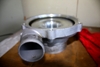
Yeah it would be better to just use a Bosch 3 bar TMAP.
Something like this:
0 281 002 437
For comparison, this is our stocker:
0 261 230 042
Physically its plug and play. Just needs to be tuned.
Something like this:
0 281 002 437
For comparison, this is our stocker:
0 261 230 042
Physically its plug and play. Just needs to be tuned.
Last edited by Pyros777; Dec 15, 2009 at 05:47 PM.
Thread Starter
Banned
Joined: 02-23-06
Posts: 1,287
Likes: 0
From: Mo-town, WV
Senior Member
Joined: 05-01-06
Posts: 4,976
Likes: 2
From: West Coast, FL
How's this working out?
Curious about this option. Having a hard time finding someplace that actually sells this part, though...
Yeah it would be better to just use a Bosch 3 bar TMAP.
Something like this:
0 281 002 437
For comparison, this is our stocker:
0 261 230 042
Physically its plug and play. Just needs to be tuned.
Something like this:
0 281 002 437
For comparison, this is our stocker:
0 261 230 042
Physically its plug and play. Just needs to be tuned.
Last edited by Edubs; Feb 17, 2010 at 11:57 AM. Reason: Automerged Doublepost