


any ideas with p0172


Thread Starter
Senior Member
Joined: 04-09-06
Posts: 546
Likes: 0
From: Frederick, Maryland
any ideas with p0172
I have been getting this code while I am under full throttle not all the time it has happened twice. I was thinking of clean maf maybe looking for some info.
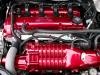

xTooltipElement
Service Information
2007 Chevrolet Cobalt | Cobalt, G5 (VIN A) Service Manual | Document ID: 1823660
--------------------------------------------------------------------------------
DTC P0172
Circuit Description
The powertrain control module (PCM) controls the air/fuel metering system in order to provide the best possible combination of driveability, fuel economy, and emission control. Fuel delivery is controlled differently during Open Loop and Closed Loop. During Open Loop, the PCM determines fuel delivery based on sensor signals, without heated oxygen sensor (HO2S) input. During Closed Loop, the PCM adds HO2S inputs and level of purge to calculate the short and long term fuel trim adjustments. If the HO2S indicates a lean condition, the fuel trim values will be above 0 percent. If the HO2S indicates a rich condition, the fuel trim values will be below 0 percent. The short term fuel trim values change rapidly in response to the HO2S voltage signals. The long term fuel trim makes coarse adjustments in order to maintain Air/Fuel Ratio of 14.7:1. The fuel trim diagnostic will conduct a test to determine if a rich failure actually exists or if excessive vapor from the evaporative emission (EVAP) canister is causing a rich condition. A block of cells contain information arranged in combinations of engine RPM and engine load for a full range of vehicle operating conditions. The long term fuel trim diagnostic is based on an average of cells currently being used. The PCM selects the cells based on the engine speed and load. If the PCM detects an excessively rich condition, DTC P0172 sets.
DTC Descriptor
This diagnostic procedure supports the following DTC:
DTC P0172 Fuel Trim System Rich
Conditions for Running the DTC
• DTCs P0030, P0036, P0068, P0069, P0101, P0102, P0103, P0106, P0107, P0108, P0117, P0118, P0120, P0121, P0122, P0123, P0125 , P0128, P0130, P0131, P0132, P0133, P0134, P0135, P0136, P0137, P0138, P0140, P0141, P0201-P0204, P0220, P0222, P0223, P0300, P0301-P0304, P0442, P0443, P0446, P0449, P0451, P0452, P0453, P0454, P0455, P0496, P0506, P0507, P1133, P1134, P1516, P1680, P1681, P2101, P2119, P2120, P2122, P2123, P2125, P2127, P2128, P2135, P2138, P2176 are not set.
• The engine is in Closed Loop status.
• The engine coolant temperature (ECT) is between -7 and +120°C (+19.4 and +248°F).
• The intake air temperature (IAT) is between -7 and +145°C (+19.4 and +293°F).
• The manifold absolute pressure (MAP) is between 15-100 kPa (2.2-14.5 psi).
• The mass air flow (MAF) is between 1-512 g/s.
• The vehicle speed is less than 132 km/h (82 mph).
• The engine speed is between 400-6,100 RPM.
• The barometric pressure (BARO) is greater than 72 kPa (10.4 psi).
• The fuel level is more than 10 percent.
• DTC P0172 runs continuously when the above conditions have been met.
Conditions for Setting the DTC
• The long term fuel trim weighted average value is less than a calibrated value.
• The above condition is present for more than 2 minutes.
Action Taken When the DTC Sets
• The control module illuminates the malfunction indicator lamp (MIL) on the second consecutive ignition cycle that the diagnostic runs and fails.
• The control module records the operating conditions at the time the diagnostic fails. The first time the diagnostic fails, the control module stores this information in the Failure Records. If the diagnostic reports a failure on the second consecutive ignition cycle, the control module records the operating conditions at the time of the failure. The control module writes the operating conditions to the Freeze Frame and updates the Failure Records.
Conditions for Clearing the MIL/DTC
• The control module turns OFF the malfunction indicator lamp (MIL) after 3 consecutive ignition cycles that the diagnostic runs and does not fail.
• A current DTC, Last Test Failed, clears when the diagnostic runs and passes.
• A history DTC clears after 40 consecutive warm-up cycles, if no failures are reported by this or any other emission related diagnostic.
• Clear the MIL and the DTC with a scan tool.
Diagnostic Aids
• Fuel contamination, such as water and alcohol, will affect the fuel trim.
• The system will go rich if the injectors are supplying too much fuel.
• Using the scan tool, review the Failure Records. If an intermittent condition is suspected, refer to Intermittent Conditions .
Test Description
The number below refers to the step number on the diagnostic table.
8.If conditions were not corrected, a worn cam, worn intake or exhaust valves or other engine mechanical failure may be at fault.
Step
Action
Values
Yes
No
1
Did you perform the Diagnostic System Check - Vehicle?
--
Go to Step 2
Go to Diagnostic System Check - Vehicle
2
Important: Disregard any transmission symptoms, antilock brake system (ABS) indicators, and traction control system (TCS) indicators until any fuel trim faults are repaired. A fuel trim fault may cause default actions such as harsh shifts and illumination of the ABS/TCS indicators.
Are any DTCs other than DTC P0172 also set?
--
Go to Diagnostic Trouble Code (DTC) List - Vehicle
Go to Step 3
3
•Install a scan tool.
•Review the Freeze Frame/Failure Records and record the displayed data for this DTC.
•Select Fuel Trim Data parameter.
•Start the engine.
•Observe the Long Term FT parameter with a scan tool.
Is the Long Term FT parameter less than the specified value?
-19%
Go to Step 4
Go to Diagnostic Aids
4
•Start the engine.
•Allow the engine to reach operating temperature.
•Put the transmission in the NEUTRAL position.
•Turn OFF all of the accessories.
•Allow the engine to idle.
•Observe the Manifold Absolute Pressure (MAP) sensor parameter with a scan tool.
Is the MAP sensor parameter within the specified range?
19-42 kPa
Go to Step 5
Go to DTC P0106
5
•Operate the engine at idle.
•Observe the Heated Oxygen Sensor (HO2S) parameters with a scan tool.
Does the scan tool indicate that the values are within the specified range and fluctuating?
40-900 mV
Go to Step 6
Go to Step 7
6
•Turn OFF the engine.
•Visually and physically inspect the following items:
• The vacuum hoses for splits, kinks, and proper connections--Refer to Emission Hose Routing Diagram .
• The air intake duct for being collapsed or restricted
• The air filter for being dirty or restricted
• For objects blocking the throttle body
Did you find and correct the condition?
--
Go to Step 9
Go to Step 8
7
•Turn OFF the engine.
•Inspect for the following conditions:
• The HO2S for proper installation
• The electrical connectors and wires are secured and not contacting the exhaust system
• The HO2S signal circuit for a short to voltage
•Refer to Circuit Testing and Wiring Repairs .
Did you find and correct the condition?
--
Go to Step 9
Go to Fuel System Diagnosis
8
Inspect for the following:
• Excessive fuel in the crankcase
• The evaporative emissions control system for proper operation
• The fuel system for proper operation--Refer to Fuel System Diagnosis .
• Ensure that all injectors are functioning properly. Refer to Fuel Injector Diagnosis .
• Fuel contamination--Refer to Alcohol/Contaminants-in-Fuel Diagnosis .
Did you find and correct the condition?
--
Go to Step 9
Go to Symptoms - Engine Mechanical
9
Important: After repairs, use the scan tool Fuel Trim Reset function in order to reset the Long Term Fuel Trim.
•Turn ON the ignition, with the engine OFF.
Important: Do not clear codes with the engine running. The codes may reset in the same ignition cycle.
•Clear the DTCs with a scan tool.
•Turn OFF the ignition for 30 seconds.
•Start the engine.
•Operate the vehicle within the Conditions for Running the DTC. You may also operate the vehicle within the conditions that you observed from the Freeze Frame/Failure Records.
Did the DTC fail this ignition?
--
Go to Step 2
Go to Step 10
10
To verify that the performance of the catalytic converter has not been affected by the condition that set this DTC, perform the Repair Verification for DTC P0420. Refer to DTC P0420 .
Did you complete the procedure?
--
Go to Step 11
Go to DTC P0420
11
Observe the Capture Info with a scan tool.
Have any other DTCs not been diagnosed?
--
Go to Diagnostic Trouble Code (DTC) List - Vehicle
System OK
© 2009 General Motors Corporation. All rights reserved.
Service Information
2007 Chevrolet Cobalt | Cobalt, G5 (VIN A) Service Manual | Document ID: 1823660
--------------------------------------------------------------------------------
DTC P0172
Circuit Description
The powertrain control module (PCM) controls the air/fuel metering system in order to provide the best possible combination of driveability, fuel economy, and emission control. Fuel delivery is controlled differently during Open Loop and Closed Loop. During Open Loop, the PCM determines fuel delivery based on sensor signals, without heated oxygen sensor (HO2S) input. During Closed Loop, the PCM adds HO2S inputs and level of purge to calculate the short and long term fuel trim adjustments. If the HO2S indicates a lean condition, the fuel trim values will be above 0 percent. If the HO2S indicates a rich condition, the fuel trim values will be below 0 percent. The short term fuel trim values change rapidly in response to the HO2S voltage signals. The long term fuel trim makes coarse adjustments in order to maintain Air/Fuel Ratio of 14.7:1. The fuel trim diagnostic will conduct a test to determine if a rich failure actually exists or if excessive vapor from the evaporative emission (EVAP) canister is causing a rich condition. A block of cells contain information arranged in combinations of engine RPM and engine load for a full range of vehicle operating conditions. The long term fuel trim diagnostic is based on an average of cells currently being used. The PCM selects the cells based on the engine speed and load. If the PCM detects an excessively rich condition, DTC P0172 sets.
DTC Descriptor
This diagnostic procedure supports the following DTC:
DTC P0172 Fuel Trim System Rich
Conditions for Running the DTC
• DTCs P0030, P0036, P0068, P0069, P0101, P0102, P0103, P0106, P0107, P0108, P0117, P0118, P0120, P0121, P0122, P0123, P0125 , P0128, P0130, P0131, P0132, P0133, P0134, P0135, P0136, P0137, P0138, P0140, P0141, P0201-P0204, P0220, P0222, P0223, P0300, P0301-P0304, P0442, P0443, P0446, P0449, P0451, P0452, P0453, P0454, P0455, P0496, P0506, P0507, P1133, P1134, P1516, P1680, P1681, P2101, P2119, P2120, P2122, P2123, P2125, P2127, P2128, P2135, P2138, P2176 are not set.
• The engine is in Closed Loop status.
• The engine coolant temperature (ECT) is between -7 and +120°C (+19.4 and +248°F).
• The intake air temperature (IAT) is between -7 and +145°C (+19.4 and +293°F).
• The manifold absolute pressure (MAP) is between 15-100 kPa (2.2-14.5 psi).
• The mass air flow (MAF) is between 1-512 g/s.
• The vehicle speed is less than 132 km/h (82 mph).
• The engine speed is between 400-6,100 RPM.
• The barometric pressure (BARO) is greater than 72 kPa (10.4 psi).
• The fuel level is more than 10 percent.
• DTC P0172 runs continuously when the above conditions have been met.
Conditions for Setting the DTC
• The long term fuel trim weighted average value is less than a calibrated value.
• The above condition is present for more than 2 minutes.
Action Taken When the DTC Sets
• The control module illuminates the malfunction indicator lamp (MIL) on the second consecutive ignition cycle that the diagnostic runs and fails.
• The control module records the operating conditions at the time the diagnostic fails. The first time the diagnostic fails, the control module stores this information in the Failure Records. If the diagnostic reports a failure on the second consecutive ignition cycle, the control module records the operating conditions at the time of the failure. The control module writes the operating conditions to the Freeze Frame and updates the Failure Records.
Conditions for Clearing the MIL/DTC
• The control module turns OFF the malfunction indicator lamp (MIL) after 3 consecutive ignition cycles that the diagnostic runs and does not fail.
• A current DTC, Last Test Failed, clears when the diagnostic runs and passes.
• A history DTC clears after 40 consecutive warm-up cycles, if no failures are reported by this or any other emission related diagnostic.
• Clear the MIL and the DTC with a scan tool.
Diagnostic Aids
• Fuel contamination, such as water and alcohol, will affect the fuel trim.
• The system will go rich if the injectors are supplying too much fuel.
• Using the scan tool, review the Failure Records. If an intermittent condition is suspected, refer to Intermittent Conditions .
Test Description
The number below refers to the step number on the diagnostic table.
8.If conditions were not corrected, a worn cam, worn intake or exhaust valves or other engine mechanical failure may be at fault.
Step
Action
Values
Yes
No
1
Did you perform the Diagnostic System Check - Vehicle?
--
Go to Step 2
Go to Diagnostic System Check - Vehicle
2
Important: Disregard any transmission symptoms, antilock brake system (ABS) indicators, and traction control system (TCS) indicators until any fuel trim faults are repaired. A fuel trim fault may cause default actions such as harsh shifts and illumination of the ABS/TCS indicators.
Are any DTCs other than DTC P0172 also set?
--
Go to Diagnostic Trouble Code (DTC) List - Vehicle
Go to Step 3
3
•Install a scan tool.
•Review the Freeze Frame/Failure Records and record the displayed data for this DTC.
•Select Fuel Trim Data parameter.
•Start the engine.
•Observe the Long Term FT parameter with a scan tool.
Is the Long Term FT parameter less than the specified value?
-19%
Go to Step 4
Go to Diagnostic Aids
4
•Start the engine.
•Allow the engine to reach operating temperature.
•Put the transmission in the NEUTRAL position.
•Turn OFF all of the accessories.
•Allow the engine to idle.
•Observe the Manifold Absolute Pressure (MAP) sensor parameter with a scan tool.
Is the MAP sensor parameter within the specified range?
19-42 kPa
Go to Step 5
Go to DTC P0106
5
•Operate the engine at idle.
•Observe the Heated Oxygen Sensor (HO2S) parameters with a scan tool.
Does the scan tool indicate that the values are within the specified range and fluctuating?
40-900 mV
Go to Step 6
Go to Step 7
6
•Turn OFF the engine.
•Visually and physically inspect the following items:
• The vacuum hoses for splits, kinks, and proper connections--Refer to Emission Hose Routing Diagram .
• The air intake duct for being collapsed or restricted
• The air filter for being dirty or restricted
• For objects blocking the throttle body
Did you find and correct the condition?
--
Go to Step 9
Go to Step 8
7
•Turn OFF the engine.
•Inspect for the following conditions:
• The HO2S for proper installation
• The electrical connectors and wires are secured and not contacting the exhaust system
• The HO2S signal circuit for a short to voltage
•Refer to Circuit Testing and Wiring Repairs .
Did you find and correct the condition?
--
Go to Step 9
Go to Fuel System Diagnosis
8
Inspect for the following:
• Excessive fuel in the crankcase
• The evaporative emissions control system for proper operation
• The fuel system for proper operation--Refer to Fuel System Diagnosis .
• Ensure that all injectors are functioning properly. Refer to Fuel Injector Diagnosis .
• Fuel contamination--Refer to Alcohol/Contaminants-in-Fuel Diagnosis .
Did you find and correct the condition?
--
Go to Step 9
Go to Symptoms - Engine Mechanical
9
Important: After repairs, use the scan tool Fuel Trim Reset function in order to reset the Long Term Fuel Trim.
•Turn ON the ignition, with the engine OFF.
Important: Do not clear codes with the engine running. The codes may reset in the same ignition cycle.
•Clear the DTCs with a scan tool.
•Turn OFF the ignition for 30 seconds.
•Start the engine.
•Operate the vehicle within the Conditions for Running the DTC. You may also operate the vehicle within the conditions that you observed from the Freeze Frame/Failure Records.
Did the DTC fail this ignition?
--
Go to Step 2
Go to Step 10
10
To verify that the performance of the catalytic converter has not been affected by the condition that set this DTC, perform the Repair Verification for DTC P0420. Refer to DTC P0420 .
Did you complete the procedure?
--
Go to Step 11
Go to DTC P0420
11
Observe the Capture Info with a scan tool.
Have any other DTCs not been diagnosed?
--
Go to Diagnostic Trouble Code (DTC) List - Vehicle
System OK
© 2009 General Motors Corporation. All rights reserved.



Are you stock? I started getting that code all the time when i put in my OTTP stage 2. Their canned tune is pig rich. Custom tune fixed it
Last edited by Bluelightning; Aug 18, 2010 at 03:52 PM.


Member
Joined: 04-20-09
Posts: 253
Likes: 0
From: PA,Boyertown
ill tell you this i put up like 5 thread about this code. i did everything to stop it. i did what shopkey5 , alldata, and the dealer printed me out some papers. dont bother cleaning anything or buying new parts the only fix is a retune. end of story. im not going to watch someone else suffer with that code like i did. haha just get a new tune and your set....

Banned
Joined: 10-14-07
Posts: 1,546
Likes: 0
From: Austin, TX
ill tell you this i put up like 5 thread about this code. i did everything to stop it. i did what shopkey5 , alldata, and the dealer printed me out some papers. dont bother cleaning anything or buying new parts the only fix is a retune. end of story. im not going to watch someone else suffer with that code like i did. haha just get a new tune and your set....
Though it could be a faulty primary O2 sensor. ;-)

Thread
Thread Starter
Forum
Replies
Last Post