Boost leak test


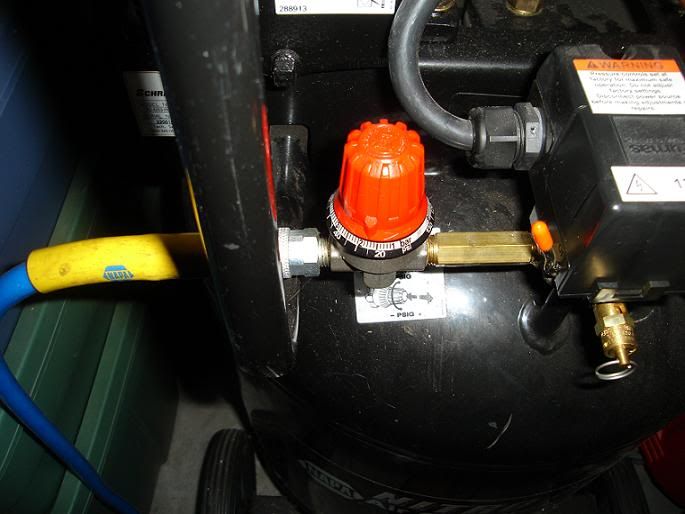
I got a tester for 20.00 from the boostpro wedsite. It attaches to the intake of the turbo and you hook it to the air compressor and pressurize and you will here the leaks.

Senior Member
Joined: 07-25-08
Posts: 12,450
Likes: 6
From: Florida
OK, I found out that if you have just a breather on the line that had the pcv valve, you already have a boost leak the size of Texas. I am going to try and get a new intake tube and pcv valve from the shop under warranty.

Senior Member
Joined: 06-22-09
Posts: 5,989
Likes: 7
From: Kathmandu
That just means you didn't cap off the coldside tube at the throttle body. The pressure you're applying through the compressor is going past the TB into the crankcase and pressurizing it. You should remove your oil cap if you're going to do it that way. Our intake tube are impossible to reach, so I guess I understand why you're doing it that way.
I was told to take off the airbox and do it threw the intake tube. Wasnt told you had to take it off the throttle body or anything but maybe I will try and do it that way.
Senior Member
Joined: 06-22-09
Posts: 5,989
Likes: 7
From: Kathmandu
Sorry to send you back to the hardware store, but it's the right way to do it. Someone always points out that you're not testing the TB connection, but that connection doesn't generally leak.

Former Vendor
Joined: 06-03-08
Posts: 4,169
Likes: 8
From: Grand Rapids, MI
Are you guys plugging both of the PCV tubes before you pressurize the system prior to the turbo? If not, then you are going to pressurise the crankcase.
You also have to be careful with how much pressure you put through the turbo and how long you leave it connected. The turbo will be spinning without any fresh oil being pumped through it. I prefer to cap off the turbo inlet and then pressurize the system beyond the turbo.
You also have to be careful with how much pressure you put through the turbo and how long you leave it connected. The turbo will be spinning without any fresh oil being pumped through it. I prefer to cap off the turbo inlet and then pressurize the system beyond the turbo.

I want to check to see if I have any boost leaks with the Injen CP's.
Which one? http://www.boostpro.net/prodtester.html
I want to check to see if I have any boost leaks with the Injen CP's.
I want to check to see if I have any boost leaks with the Injen CP's.
Are you guys plugging both of the PCV tubes before you pressurize the system prior to the turbo? If not, then you are going to pressurise the crankcase.
You also have to be careful with how much pressure you put through the turbo and how long you leave it connected. The turbo will be spinning without any fresh oil being pumped through it. I prefer to cap off the turbo inlet and then pressurize the system beyond the turbo.
You also have to be careful with how much pressure you put through the turbo and how long you leave it connected. The turbo will be spinning without any fresh oil being pumped through it. I prefer to cap off the turbo inlet and then pressurize the system beyond the turbo.
Last edited by cmiller8006; Apr 15, 2010 at 03:12 PM. Reason: Automerged Doublepost
Senior Member
Joined: 06-22-09
Posts: 5,989
Likes: 7
From: Kathmandu
Are you guys plugging both of the PCV tubes before you pressurize the system prior to the turbo? If not, then you are going to pressurise the crankcase.
You also have to be careful with how much pressure you put through the turbo and how long you leave it connected. The turbo will be spinning without any fresh oil being pumped through it. I prefer to cap off the turbo inlet and then pressurize the system beyond the turbo.
You also have to be careful with how much pressure you put through the turbo and how long you leave it connected. The turbo will be spinning without any fresh oil being pumped through it. I prefer to cap off the turbo inlet and then pressurize the system beyond the turbo.
Thanks for the tip on the turbo. I usually find the leaks pretty quick, but it's good info.
Former Vendor
Joined: 06-03-08
Posts: 4,169
Likes: 8
From: Grand Rapids, MI
Capping off the charge tube at the TB doesn't keep you from boosting the crankcase if you still have the vent hose running from the turbo to the valve cover.
Senior Member
Joined: 06-22-09
Posts: 5,989
Likes: 7
From: Kathmandu

Senior Member
iTrader: (1)
Joined: 11-29-06
Posts: 4,105
Likes: 0
From: New Minas, Nova Scotia, Canada
http://www.modernperformance.com/inc...es-p-1971.html
will this work? So I would need to put this on the intake side of the turbo and pressurize the system?
will this work? So I would need to put this on the intake side of the turbo and pressurize the system?
Senior Member
Joined: 06-22-09
Posts: 5,989
Likes: 7
From: Kathmandu
Here is my tester that I built for around 10 bucks. All parts were from Home Depot.

I was attaching it to the input port of the turbo where the intake tube goes on, removing my oil filler cap from the valve cover, pressurizing it to 20 psi, and checking for leaks. I also blocked the coldside tube at the throttle body with a plug, but that was a pain in the ass. ZZP says we're still getting positive pressure to the valve cover through this line:

I don't know how to bypass. You'll just have to put up with the deep air noise coming from the oil filler cap hole, I guess.
I was attaching it to the input port of the turbo where the intake tube goes on, removing my oil filler cap from the valve cover, pressurizing it to 20 psi, and checking for leaks. I also blocked the coldside tube at the throttle body with a plug, but that was a pain in the ass. ZZP says we're still getting positive pressure to the valve cover through this line:
I don't know how to bypass. You'll just have to put up with the deep air noise coming from the oil filler cap hole, I guess.
Senior Member
iTrader: (1)
Joined: 11-29-06
Posts: 4,105
Likes: 0
From: New Minas, Nova Scotia, Canada
I would say that the best way to do it is to take the charge pipe off the turbo and start there, cap off the cold side at the throttle body and put a vacuum cap over the line where the hose goes from the lower cp to the boost solenoid.
Senior Member
Joined: 06-22-09
Posts: 5,989
Likes: 7
From: Kathmandu
I'd say that's probably right, but I don't know about the boost solenoid thing. I think the pressure just stops at the solenoid.