


2.2 / 2.4 heads are they interchangeable?


Thread Starter
New Member
Joined: 04-19-07
Posts: 12
Likes: 0
From: Lake Elsinore CA
2.2 / 2.4 heads are they interchangeable?
I am having a 2.4 engine built for our CORR off road race truck and i need to know if the 2.2 head will fit on a 2.4 block. Can anyone help???

Banned
Joined: 01-12-07
Posts: 987
Likes: 0
From: Elyria/Ohio
dont know
hmmm i would say there similar but the do you mean the header or the HEAD for valves and rockers and stuff. cuz if its the header it might fit both. if its the head it wont fit the 2.2 the 2.5 is bigger.
ryan.
ryan.

I believe it will fit onto the block but you have to take into consideration the 2.4's head has all the vvt componets the 2.2 head does not. I'd stick with the 2.4 head, p&p and contact JBP for cams/springs/vavles etc.

Banned
Joined: 10-11-06
Posts: 5,929
Likes: 0
From: in ur moms bed

Senior Member
Joined: 12-24-05
Posts: 2,936
Likes: 1
From: Maryland
the 2.2 head will not work on the 2.4, but i would contact JBP to see if they can do something like this for the 2.4.
http://www.jbodyperformance.com/new/...catName=JP0940
http://www.jbodyperformance.com/new/...catName=JP0940
Thread Starter
New Member
Joined: 04-19-07
Posts: 12
Likes: 0
From: Lake Elsinore CA
The ecotec 2.4 block has new rods and pistons and other work done to it, now we have the head issue . We have the 2.2 ecotec head that has extensive work done to it.this motor will be naturally aspirated and need to get 300+ hp out of it. We have had lots of people tell us this head will work on the 2.4 block and alot of people telling us it wont...I AM SO LOST!!!!!!!

Senior Member
Joined: 12-23-06
Posts: 1,500
Likes: 0
From: York, PA
variable valve timing
Piston engines normally use poppet valves for intake and exhaust. These are driven (directly or indirectly) by cams on a camshaft. The cams open the valves (lift) for a certain amount of time (duration) during each intake and exhaust cycle. The timing of the valve opening and closing is also important. The camshaft is driven by the crankshaft through timing belts, gears or chains.
The profile, or position and shape of the cam lobes on the shaft, is optimized for a certain engine rpm, and this tradeoff normally limits low-end torque or high-end power. VVT allows the cam profile to change, which results in greater efficiency and power.
At high engine speeds, an engine requires large amounts of air. However, the intake valves may close before all the air has been given a chance to flow in, reducing performance.
On the other hand, if the cam keeps the valves open for longer periods of time, as with a racing cam, problems start to occur at the lower engine speeds. This will cause unburnt fuel to exit the engine since the valves are still open. This leads to lower engine performance and increased emissions.
Pressure to meet environmental goals and fuel efficiency standards is forcing car manufacturers to turn to VVT as a solution. Most simple VVT systems (like Mazda's S-VT) advance or retard the timing of the intake or exhaust valves. Others (like Honda's VTEC) switch between two sets of cam lobes at a certain engine RPM. Still others (like BMW's Valvetronic) can alter timing and lift continuously, which is called Continuous variable valve timing or CVVT.
Piston engines normally use poppet valves for intake and exhaust. These are driven (directly or indirectly) by cams on a camshaft. The cams open the valves (lift) for a certain amount of time (duration) during each intake and exhaust cycle. The timing of the valve opening and closing is also important. The camshaft is driven by the crankshaft through timing belts, gears or chains.
The profile, or position and shape of the cam lobes on the shaft, is optimized for a certain engine rpm, and this tradeoff normally limits low-end torque or high-end power. VVT allows the cam profile to change, which results in greater efficiency and power.
At high engine speeds, an engine requires large amounts of air. However, the intake valves may close before all the air has been given a chance to flow in, reducing performance.
On the other hand, if the cam keeps the valves open for longer periods of time, as with a racing cam, problems start to occur at the lower engine speeds. This will cause unburnt fuel to exit the engine since the valves are still open. This leads to lower engine performance and increased emissions.
Pressure to meet environmental goals and fuel efficiency standards is forcing car manufacturers to turn to VVT as a solution. Most simple VVT systems (like Mazda's S-VT) advance or retard the timing of the intake or exhaust valves. Others (like Honda's VTEC) switch between two sets of cam lobes at a certain engine RPM. Still others (like BMW's Valvetronic) can alter timing and lift continuously, which is called Continuous variable valve timing or CVVT.
Last edited by 07cobaltowner; Apr 19, 2007 at 03:50 PM. Reason: Automerged Doublepost
Thread Starter
New Member
Joined: 04-19-07
Posts: 12
Likes: 0
From: Lake Elsinore CA
if the 2..2 head doesnt have the vvt, will I lose lots of horsepower? or will it just be emission crap. this engine wil be in an off raod race truck so emissions arent a problem
Here ya go straight from the very knowledgeable Maven of ecotecforum .com:
"HEADS: or most specifically a 2.0LSJ/LK9 or L61 head on the 2.4L LE5 block. YES you CAN put a non VVT head on the 2.4L block. Its a simple bolt on deal and only requires the use of the LE5 headgasket no matter what head you use. YES YOU CAN MAKE AN L61 or LSJ HEADED 2.4L LE5 WITH NO MODS"
They have a sticky over there about what parts the ecotecs can mix and match pretty good info. Not sure on the performance difference, since we aren't able to change the vvt settings yet. I'm sure you can get some ponies out of her by using a built le5 head. However using the 2.2 built head isn't really a bad thing. Simplifies the motor and wiring/engine managment. Since this is going in an off road truck thats prolly a good thing for you, less headaches. Anyways i'm rampling and need to get to work.
"HEADS: or most specifically a 2.0LSJ/LK9 or L61 head on the 2.4L LE5 block. YES you CAN put a non VVT head on the 2.4L block. Its a simple bolt on deal and only requires the use of the LE5 headgasket no matter what head you use. YES YOU CAN MAKE AN L61 or LSJ HEADED 2.4L LE5 WITH NO MODS"
They have a sticky over there about what parts the ecotecs can mix and match pretty good info. Not sure on the performance difference, since we aren't able to change the vvt settings yet. I'm sure you can get some ponies out of her by using a built le5 head. However using the 2.2 built head isn't really a bad thing. Simplifies the motor and wiring/engine managment. Since this is going in an off road truck thats prolly a good thing for you, less headaches. Anyways i'm rampling and need to get to work.
Last edited by Brandon97Z; Apr 19, 2007 at 11:03 PM. Reason: Automerged Doublepost
Thread Starter
New Member
Joined: 04-19-07
Posts: 12
Likes: 0
From: Lake Elsinore CA
Thanx for all your help guys I will keep you all posted on how it all works out. It should be a screamer . CBM out of Ontario CA will be doing the build. Great guys to work with on your ecotec motors.We should be a bit over 300 hp naturally aspirated.
Banned
Joined: 01-12-07
Posts: 987
Likes: 0
From: Elyria/Ohio
hmmm
yeah i thought that you could put the 2.4 head on the 2.2 or maybe even the 2.0 but not sure bout the 2.0 but should work with 2.2 but then youd have to do some serious tuing for the vvt on the 2.2 with the 2.4 head. but that should be interesting.
ryan.
ryan.
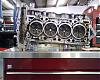
You cant put a VVT head on a non VVT block without mods to the head(and why would you want to, theres very limited cam selection for the VVT engines and the heads are heavier, theres no flow benefits to the VVT heads as all ECO heads use the same size valves)
You can put any head you like on a VVT block.
You can put any head you like on a VVT block.



Thread
Thread Starter
Forum
Replies
Last Post
Jesse
Problems/Service/Maintenance
2
Sep 28, 2015 12:51 PM