Launching the Automatic - Brake Starting

Thread Starter
I'm old school
Joined: 02-16-05
Posts: 6,905
Likes: 3
From: Nashville
Launching the Automatic - Brake Starting
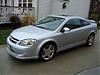
With my automatic Cobalt and its modifications I am often asked how to launch it. So I thought I'd make a sticky about the technique known as Brake Starting. Most drag racing cars use automatics, and this is the technique they use.
The brake start works like this: With your car positioned on the start line, hold your regular brakes (not the parking brake) and place the car in gear. This simple act is called Brake Torqueing. Apply full pressure to your brake pedal.
Now go to Wide Open Throttle (WOT). Your tach will stop increasing at a particular RPM. That RPM is known as Stall Speed. It the fastest your Torque Converter will allow the engine to turn without the wheels turning.
At this point, release the brake pedal. Car takes off.
General notes:
This practice causes your transmission fluid inside the torque converter to absorb all of the torque from your engine turning when the wheels are not. This generates a lot of heat, and will destroy your fluid if you hold the Stall Speed any longer then necessary. Once you achieve stall, you should be releasing the brake within a second. Vehicles that use this technique should install an extra transmission fluid heat exchanger. They are rather cheap.
Brake starting should produce a cleaner initial start then a manual clutch can. The reason is due to the fact that the torque is already at the wheels before you even begin moving. Only your brakes are preventing the wheels from turning. A clutch start sends a jolt of torque through the trans and axles at the launch, which can create huge stresses on parts, causing things like the commonly known broken axle.
Brake Torqueing works on all automatic trans equipped cars, front or rear wheel drive. However, on a rear wheel drive, you probably won't achieve Stall. The rear wheels will more then likely start to turn due to the rear brakes not having enough clamping power to stop the power being delivered by the engine.
Cobalt Specific notes:
The stock stall speed on the 4T45E torque converter installed in the Cobalt is about 2400 RPM. Additionally, the converter is the weakest part of the transmission, designed only to accept about 250 ft/lbs of torque while the trans itself can handle about 320. A typical stage 2 turbo system that doesn't require you to upgrade your drive train in any way will work fine in a stock setup. Anything over 250 ft/lbs however should upgrade the converter to a heavy duty 3000 RPM stall.
The Cobalt has traction control which will interfere with this kind of launch. Different model Cobalts have different ways of turning this system off. On 2005-06 model year cars, the following method is used. Select first gear, or "L" depending on your model year. There is no difference in the transmissions, only the label on the gear selector is different. This will turn off traction control. Also, the Cobalt will shift to second gear during WOT acceleration even though you are only in first. After this shift occurs, slide the selector into second. This won't change anything except to allow the car to shift to third. Just like before, even though your are in second, it will still up shift one gear. It will not shift to third however if only first gear is selected. Once the car is in third, select "D"
On 2007 model year and up cars, turning traction control off varies. Check your manual. Some cars have an actual, simple button on the dash to turn it off, which is nice and easy.
The 4T45E has an open differential. Brake starting will probably result in one wheel spinning while the other one stands still. Without an LSD, you will need to practice your starts and vary your brake torqued throttle launch speed to get good launch traction.
The brake start works like this: With your car positioned on the start line, hold your regular brakes (not the parking brake) and place the car in gear. This simple act is called Brake Torqueing. Apply full pressure to your brake pedal.
Now go to Wide Open Throttle (WOT). Your tach will stop increasing at a particular RPM. That RPM is known as Stall Speed. It the fastest your Torque Converter will allow the engine to turn without the wheels turning.
At this point, release the brake pedal. Car takes off.
General notes:
This practice causes your transmission fluid inside the torque converter to absorb all of the torque from your engine turning when the wheels are not. This generates a lot of heat, and will destroy your fluid if you hold the Stall Speed any longer then necessary. Once you achieve stall, you should be releasing the brake within a second. Vehicles that use this technique should install an extra transmission fluid heat exchanger. They are rather cheap.
Brake starting should produce a cleaner initial start then a manual clutch can. The reason is due to the fact that the torque is already at the wheels before you even begin moving. Only your brakes are preventing the wheels from turning. A clutch start sends a jolt of torque through the trans and axles at the launch, which can create huge stresses on parts, causing things like the commonly known broken axle.
Brake Torqueing works on all automatic trans equipped cars, front or rear wheel drive. However, on a rear wheel drive, you probably won't achieve Stall. The rear wheels will more then likely start to turn due to the rear brakes not having enough clamping power to stop the power being delivered by the engine.
Cobalt Specific notes:
The stock stall speed on the 4T45E torque converter installed in the Cobalt is about 2400 RPM. Additionally, the converter is the weakest part of the transmission, designed only to accept about 250 ft/lbs of torque while the trans itself can handle about 320. A typical stage 2 turbo system that doesn't require you to upgrade your drive train in any way will work fine in a stock setup. Anything over 250 ft/lbs however should upgrade the converter to a heavy duty 3000 RPM stall.
The Cobalt has traction control which will interfere with this kind of launch. Different model Cobalts have different ways of turning this system off. On 2005-06 model year cars, the following method is used. Select first gear, or "L" depending on your model year. There is no difference in the transmissions, only the label on the gear selector is different. This will turn off traction control. Also, the Cobalt will shift to second gear during WOT acceleration even though you are only in first. After this shift occurs, slide the selector into second. This won't change anything except to allow the car to shift to third. Just like before, even though your are in second, it will still up shift one gear. It will not shift to third however if only first gear is selected. Once the car is in third, select "D"
On 2007 model year and up cars, turning traction control off varies. Check your manual. Some cars have an actual, simple button on the dash to turn it off, which is nice and easy.
The 4T45E has an open differential. Brake starting will probably result in one wheel spinning while the other one stands still. Without an LSD, you will need to practice your starts and vary your brake torqued throttle launch speed to get good launch traction.
Last edited by Halfcent; Apr 7, 2009 at 11:08 AM.

Senior Member
Joined: 02-09-06
Posts: 626
Likes: 0
From: Abita Springs, Louisiana
Thanks Halfcent! Great write up.
I have a 2.4 manufactured in 1/06 that has a tranny oil cooler built in to the bottom of the radiator. I hear other 06's manufactured mid year, and the 07's don't.
Do you know when the cut-off date was?
I have a 2.4 manufactured in 1/06 that has a tranny oil cooler built in to the bottom of the radiator. I hear other 06's manufactured mid year, and the 07's don't.
Do you know when the cut-off date was?
Senior Member
Joined: 08-12-06
Posts: 12,764
Likes: 1
From: here
Good stuff!
Thats odd about the trans cooler as I'm showing the 07's DO in fact have a cooler built in. Its in the drivers side radiator tank. I'll double check on my 07 when I get off work but if it doesn't have one then its the only GM automatic I know of that doesn't. As far as I know ALL GM automatic transmissions have coolers built into the radiators.
Thats odd about the trans cooler as I'm showing the 07's DO in fact have a cooler built in. Its in the drivers side radiator tank. I'll double check on my 07 when I get off work but if it doesn't have one then its the only GM automatic I know of that doesn't. As far as I know ALL GM automatic transmissions have coolers built into the radiators.
Senior Member
Joined: 02-09-06
Posts: 626
Likes: 0
From: Abita Springs, Louisiana
Originally Posted by Jackalope
Good stuff!
Thats odd about the trans cooler as I'm showing the 07's DO in fact have a cooler built in. Its in the drivers side radiator tank. I'll double check on my 07 when I get off work but if it doesn't have one then its the only GM automatic I know of that doesn't. As far as I know ALL GM automatic transmissions have coolers built into the radiators.
Thats odd about the trans cooler as I'm showing the 07's DO in fact have a cooler built in. Its in the drivers side radiator tank. I'll double check on my 07 when I get off work but if it doesn't have one then its the only GM automatic I know of that doesn't. As far as I know ALL GM automatic transmissions have coolers built into the radiators.


Senior Member
Joined: 08-12-06
Posts: 12,764
Likes: 1
From: here
Originally Posted by sushidog
My bad! It's the oil cooler that the 07's lack. Sorry for the confusion.
Thats cool! I thought thats what you ment but I didn't want to put words in your mouth.
Yeah I WISH mine had an oil cooler! LOL!
Thread Starter
I'm old school
Joined: 02-16-05
Posts: 6,905
Likes: 3
From: Nashville
All of our cars do have a factory trans fluid cooler, but you should STILL get an additional one if you plan to race with it. The fact that our transmissions have the factory cooler makes hooking up an additional one very easy. The fluid lines are already right there.

Senior Member
Joined: 03-02-06
Posts: 620
Likes: 0
From: Fleetwood, PA
Originally Posted by Halfcent
All of our cars do have a factory trans fluid cooler, but you should STILL get an additional one if you plan to race with it. The fact that our transmissions have the factory cooler makes hooking up an additional one very easy. The fluid lines are already right there.
Thread Starter
I'm old school
Joined: 02-16-05
Posts: 6,905
Likes: 3
From: Nashville
B&M makes excellet heat exchangers. They are easy to install. The hardest part is getting the fluid lines cut and fitted to right length. Any good shop should be able to fabricate them for you.

well, i just saw your thread here from a post you just made which referred to this one...so, i have a couple questions....
1) the whole process of [floor the brake] [hit the gas (bout half way? or does this technique not eliminate traction issues)] [release brake] should take one second?
2) you wouldnt have a picture of where the tranny cooler hooks up would you? since im totally new to cars n all....
1) the whole process of [floor the brake] [hit the gas (bout half way? or does this technique not eliminate traction issues)] [release brake] should take one second?
2) you wouldnt have a picture of where the tranny cooler hooks up would you? since im totally new to cars n all....
Senior Member
Joined: 03-14-05
Posts: 3,120
Likes: 0
From: NJ
Originally Posted by HunterKiller89
1) the whole process of [floor the brake] [hit the gas (bout half way? or does this technique not eliminate traction issues)] [release brake] should take one second?
The time between you getting on the gas and releasing the brakes should be less than one second. And make sure the brake is as far as it goes down, I've done it several times and anything less than fully floored does not hold my car


Senior Member
Joined: 08-30-05
Posts: 1,741
Likes: 0
From: Delaware
Great write up Halfcent! You always have great info and are great help here! 
I have heard from Brian Mitchell, who I don't know if anyone has heard of him but he bracket races (i beleive) mustangs and is among the top of his class, That unless your car is running slicks and putting out great power that it is better for you to take off like your at a red light. Im guessing to avoid wheel spin/hop. He said it can lower your 1/4 mile times by a few tenths of a second.
I have heard from Brian Mitchell, who I don't know if anyone has heard of him but he bracket races (i beleive) mustangs and is among the top of his class, That unless your car is running slicks and putting out great power that it is better for you to take off like your at a red light. Im guessing to avoid wheel spin/hop. He said it can lower your 1/4 mile times by a few tenths of a second.

Senior Member
Joined: 06-07-06
Posts: 532
Likes: 0
From: Philly, PA
Originally Posted by Halfcent
The Cobalt has traction control which will interfere with this kind of launch. To overcome that problem, select first gear, or "L" depending on your model year. There is no difference in the transmissions, only the label on the gear selector is different. This will turn off traction control. Also, the Cobalt will shift to second gear during WOT acceleration even though you are only in first. When this shift occurs, slide the selector into second. This won't change anything except to allow the car to shift to third. Just like before, even though your are in second, it will still up shift one gear. It will not shift to third however if only first gear is selected.
Are you saying that once you have this automatic in 2nd gear in "L", you can switch to "I" without possibly messing up the tranny?

Senior Member
Joined: 11-16-05
Posts: 11,137
Likes: 1
From: Central NY
Originally Posted by ReggaeRampage
Are you saying that once you have this automatic in 2nd gear in "L", you can switch to "I" without possibly messing up the tranny?

New Member
Joined: 08-03-06
Posts: 85
Likes: 0
From: Temple, TX
I just dont understand how it cant mess nothing up bumping up the shifter. Maybe if you switch out to one of those aftermarket brank tranny fluids, like B&M, Royal Purple, or Hurst, would that help any? Or is it a waste of money for the automatics?
Thread Starter
I'm old school
Joined: 02-16-05
Posts: 6,905
Likes: 3
From: Nashville
I realize it's a difficult concept to read and understand, but if you just go out and do it once, you'll see how it works. Here, do this:
Go out on some open road. Put your car in normal old ordinary "Drive" and floor it. The car will accelerate in first gear all the way to around 6500 RPM where it will shift automatically to second and continue accelerating. Just like it should.
Now...One more time...Try this...
Put the gear selector in first or low depending on how your selector is labeled. Its the furthest position back you can move the selector.
Floor it. The car will accelerate in first gear all the way to around 6500 RPM where it will shift automatically to second and continue accelerating. EVEN THOUGH THE SELECTOR IS STILL IN FIRST! Then, simply continue accelerating at WOT and slide the selector up to second. NOTHING WILL HAPPEN. The car is already in second and still accelerating. Doing this will allow the trans to now shift to 3rd, EVEN THOUGH THE SELECTOR IS STILL IN SECOND!
The whole purpose of doing this is to turn T/C off for your launch. That's it!
Go out on some open road. Put your car in normal old ordinary "Drive" and floor it. The car will accelerate in first gear all the way to around 6500 RPM where it will shift automatically to second and continue accelerating. Just like it should.
Now...One more time...Try this...
Put the gear selector in first or low depending on how your selector is labeled. Its the furthest position back you can move the selector.
Floor it. The car will accelerate in first gear all the way to around 6500 RPM where it will shift automatically to second and continue accelerating. EVEN THOUGH THE SELECTOR IS STILL IN FIRST! Then, simply continue accelerating at WOT and slide the selector up to second. NOTHING WILL HAPPEN. The car is already in second and still accelerating. Doing this will allow the trans to now shift to 3rd, EVEN THOUGH THE SELECTOR IS STILL IN SECOND!
The whole purpose of doing this is to turn T/C off for your launch. That's it!
Last edited by Halfcent; Jun 14, 2007 at 11:59 PM.

Senior Member
Joined: 12-21-05
Posts: 5,156
Likes: 0
From: Edison, NJ
Originally Posted by BossHogg
dude, im an idiot or still hung over but what the hell does WOT mean
and Halfcent, if you could tell me if changing fluids would help....you seem to know the most, thanks
and Halfcent, if you could tell me if changing fluids would help....you seem to know the most, thanks

Senior Member
Joined: 05-25-05
Posts: 1,244
Likes: 0
From: Sterling Heights, MI
Maximum torque rating is 270 N·m (200 lb ft) as stated in the GM general specifications of the 4T45E.
I can upload the information as I did with the 2.2L engine specs that I have in my picture gallery right now, if you would like (check my gallery to see what I am referring to. Page 3, I believe).
I can upload the information as I did with the 2.2L engine specs that I have in my picture gallery right now, if you would like (check my gallery to see what I am referring to. Page 3, I believe).

Banned
Joined: 04-16-06
Posts: 1,960
Likes: 0
From: Sterling, IL
Ok kids, in short. if you drag race your car, pull up to the burnout box...do your thing....go stage. left foot on the brake, right foot on the gas, shifter in L(or 1).
Why not I or D? Simple. L = No Traction Control. The traction control in these cars are very limiting when it comes to giving the driver control of the throttle again.....it cuts throttle for approx 1 sec.
So, Amber..Amber...Amber(i let off the brake here)....GREEN (i average .05 R/T's)....still in L.....go all the way through 1st, then at the top of second, shift into I.....then finish the race....since in my SS, I = 120+ish.
Why not I or D? Simple. L = No Traction Control. The traction control in these cars are very limiting when it comes to giving the driver control of the throttle again.....it cuts throttle for approx 1 sec.
So, Amber..Amber...Amber(i let off the brake here)....GREEN (i average .05 R/T's)....still in L.....go all the way through 1st, then at the top of second, shift into I.....then finish the race....since in my SS, I = 120+ish.