


Building my turbo LSJ Q and A

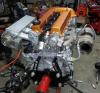
I am learning and right now no. I am having a full dyno day when I get to Little Rock (my new home next month), I want the car to go well into the 400's, my limiting factors right now are fuel injectors and a tune. I need to install 80's and a boost reference when I get done with the build.
Day 2 (mind you the days are short due to work)
So from yesterday I went back and installed the caps and NEW TTY bolts and bearings on the rod caps. Torque to 220 inch lbs (18 ft lbs) and 100 degrees. I used an inch lbs wrench due to the 3/8 drive sockets and used a breaker bar with a 3/8 drive turned to 90 degrees and then a little over to approx 100 deg.

Use silver 1600 degrees tolerance anti seize and as a tip mount your turbo manifold before you put the head back on so you dont have to work in a small space to install the manifold later. Great for turbo guys.

Turbo manifold installed. I had it powdercoated to keep the heat in and save some of that heat to make horsepower, theoretically. Plus it looks pretty.

Set engine to TDC or close to is as it will help me later with the timing and installed my new GM MLS headgasket.

Placed the head on the block by myself, its not that hard if you are tall. You may need two people. The turbo manifold makes it even heavier. I think the head alone weighs 60 lbs or somthing like that.

APR bolts. Use a 3/16 allen wrench here to tighten them down. They an only go in one way, allen hole facing up. So simple yet I tend to over complicate things but I could see someone trying to install these upside down.

Here are the bolts tightened down and the lenth of them just after setting them in. The allen wrench is there to tighten them down. You will feel pressure when turning them, that is fluid being pressed out of the holes during install, its even gurgles and burps a bit on a couple if they are really pressurized from the threading.

Use the arp grease on the top of the studs and tighten down to 80 ft lbs. But NOT ALL AT ONCE. Go in steps. Starting at the center two bolts and working your way out like a cris cross pattern on wheel lugs. Always tighten the one opposite and above or below. Till you get out the final four corners. Use any number of tightening till 80 is achieved. I used 30 ft lbs on all 10, then 60 ft lbs on all 10, then finally 80 ft lbs on all 10. Do it right or you can warp the head (supposedly).

Arp states to use 80 ft lbs after stepping the torque as previously stated WITH their grease. Other measures can be used if you are using plain old motor oil. Get the ARP grease and use it. Its comes in the box btw.

Cylinder 1 port job

Cylinder 2 port job

Cylinder 3 port job

Clyinder 4 port job

The head as it sits in its new home. The overall ports are 1 mm larger in side to side AND up and down directions measured with a digital caliper. The exhaust ports were measured but I havent taken a look at the data yet to determine the overall increase. The intake ports were cavernous around the valves. I dont have a flow chart on the head but cant wait to see how much fuel will need to be added to make up for the extra flow. Should be interesting come tune time.

That is all for today.
Tomorrow I will have more. I still need to remove the timing cover (bought new TTY bolts for the balancer and the timing gears). Set timing, install oil pan, install the valve cover (i may modify the VC while I have it off to vent the crank case pressures faster), and of course reinstall the turbo kit. Still a lot to do. The install time is many times that of removal. I had the entire engine torn down in 3 hours (including piston removal) but this is taking much longer with all the extra installed parts. Allow plenty of time to set up rings and bolts. Label everything and in order so it installs back on the car in the correct orientation.
So from yesterday I went back and installed the caps and NEW TTY bolts and bearings on the rod caps. Torque to 220 inch lbs (18 ft lbs) and 100 degrees. I used an inch lbs wrench due to the 3/8 drive sockets and used a breaker bar with a 3/8 drive turned to 90 degrees and then a little over to approx 100 deg.
Use silver 1600 degrees tolerance anti seize and as a tip mount your turbo manifold before you put the head back on so you dont have to work in a small space to install the manifold later. Great for turbo guys.
Turbo manifold installed. I had it powdercoated to keep the heat in and save some of that heat to make horsepower, theoretically. Plus it looks pretty.
Set engine to TDC or close to is as it will help me later with the timing and installed my new GM MLS headgasket.
Placed the head on the block by myself, its not that hard if you are tall. You may need two people. The turbo manifold makes it even heavier. I think the head alone weighs 60 lbs or somthing like that.
APR bolts. Use a 3/16 allen wrench here to tighten them down. They an only go in one way, allen hole facing up. So simple yet I tend to over complicate things but I could see someone trying to install these upside down.
Here are the bolts tightened down and the lenth of them just after setting them in. The allen wrench is there to tighten them down. You will feel pressure when turning them, that is fluid being pressed out of the holes during install, its even gurgles and burps a bit on a couple if they are really pressurized from the threading.
Use the arp grease on the top of the studs and tighten down to 80 ft lbs. But NOT ALL AT ONCE. Go in steps. Starting at the center two bolts and working your way out like a cris cross pattern on wheel lugs. Always tighten the one opposite and above or below. Till you get out the final four corners. Use any number of tightening till 80 is achieved. I used 30 ft lbs on all 10, then 60 ft lbs on all 10, then finally 80 ft lbs on all 10. Do it right or you can warp the head (supposedly).
Arp states to use 80 ft lbs after stepping the torque as previously stated WITH their grease. Other measures can be used if you are using plain old motor oil. Get the ARP grease and use it. Its comes in the box btw.
Cylinder 1 port job
Cylinder 2 port job
Cylinder 3 port job
Clyinder 4 port job
The head as it sits in its new home. The overall ports are 1 mm larger in side to side AND up and down directions measured with a digital caliper. The exhaust ports were measured but I havent taken a look at the data yet to determine the overall increase. The intake ports were cavernous around the valves. I dont have a flow chart on the head but cant wait to see how much fuel will need to be added to make up for the extra flow. Should be interesting come tune time.
That is all for today.
Tomorrow I will have more. I still need to remove the timing cover (bought new TTY bolts for the balancer and the timing gears). Set timing, install oil pan, install the valve cover (i may modify the VC while I have it off to vent the crank case pressures faster), and of course reinstall the turbo kit. Still a lot to do. The install time is many times that of removal. I had the entire engine torn down in 3 hours (including piston removal) but this is taking much longer with all the extra installed parts. Allow plenty of time to set up rings and bolts. Label everything and in order so it installs back on the car in the correct orientation.


Use the arp grease on the top of the studs and tighten down to 80 ft lbs. But NOT ALL AT ONCE. Go in steps. Starting at the center two bolts and working your way out like a cris cross pattern on wheel lugs. Always tighten the one opposite and above or below. Till you get out the final four corners. Use any number of tightening till 80 is achieved. I used 30 ft lbs on all 10, then 60 ft lbs on all 10, then finally 80 ft lbs on all 10. Do it right or you can warp the head (supposedly).
Lube also allows more squeezing pressure, as it requires less torque on the actual fastener. This is why you will sometimes see "dry" and "lube" torque specs. Dry torque will need to be torqued higer than lubed, to offer the same squeezing pressure.
HOW TO SET UP TIMING ON THE ecotec LSJ
Jack up the engine by the oil pan. I used a piece of wood to keep from marking or stressing the oil pan.

Remove the engine mount bolts and pull the mount off and set it aside.

Use a crow bar and a 3/8 breaker bar to remove the tension from the belt tensioner.

Pull the belt.

Using the access hole pull the bolt from the serpentine tensioner.


Pull the tension off and set it aside.

Using a 21 mm impact remove the crank bolt.


Remove all the cover bolts, they are all 10 mm.


There is a 13 mm bolt in the center of the cover. Pull it as well

Jack up the engine by the oil pan. I used a piece of wood to keep from marking or stressing the oil pan.
Remove the engine mount bolts and pull the mount off and set it aside.
Use a crow bar and a 3/8 breaker bar to remove the tension from the belt tensioner.
Pull the belt.
Using the access hole pull the bolt from the serpentine tensioner.
Pull the tension off and set it aside.
Using a 21 mm impact remove the crank bolt.
Remove all the cover bolts, they are all 10 mm.
There is a 13 mm bolt in the center of the cover. Pull it as well
Last edited by c130aviator; Sep 15, 2012 at 10:40 PM.
Using a pry bar pull the cover off at the bottom tab. If this is the frist time you have pulled the cover or have not drained the oil, there will be a mess, mine had just a few drips from the engine tear down.

This is the cover and the oil pump, you can see the keying where the crank pulley slides in and turns the oil pump.

Lower timing gear (crank) and the oil passages.

You can see where the links are caught on the tensioner, its the metal guide to the left of the chain coming out of the head. This needs to be moved to help the chain have some slack when moving the chain around for timing.

I watch the needle as I turn to get a reference for TDC. YOu could also use the markings on the crank pulley but since I had that pulled I just used this for reference.

I zero the needle then watch to see the gain and drop to make sure its absolutely TDC.

you can slide the pulley back on to move the engine to TDC but the markings wont be there since the cover is removed, that is why the needle is so helpful.

Pull the guide bolt but leave the guide in. Just push it an inch or so to the left out of the way.

Go to the top of your head and set the intake cam gear link to match the colored link. To set the link on the exhaust gear you have to put tension on the cam to get the chain link on the exhaust mark. Like picture below. I had the bolts finger tight up until now. Once you get all the links on and you know your chain is set. Torque the Cams to 63 ft lbs and 30 degrees. USE NEW BOLTS, timing and crank are torque to yeild (TTY).

Set the colored link on the white dot on the crank gear. You should not have to move it too much but the biggest thing is to make sure the link between the crank and the intake is straight and that those two marks are on without adjustment. Then use the exhaust cam gear and put enough tension to set it on the gear. Then everything should be timed. Very easy setting timing on an ecotech LSJ.

Next is the guide spring setting. Take the tensioner and set it in a vice as pictured below. Turn it with a screwdriver and it will lock down. Place it in the sleeve and install it back into the head, lining it up with the chain guide. In this sequence of pics you can see its so easy but it took me forever to figure this out on my own. Wish I had someones help when I did this.


Use a rubber tipped device (i used pliers) and set it near the tensioner. Give it a good tap and it will kick into place. Check for tension on the chain. And you are good to good.

Reverse all the steps to remove the cover and reinstall all the bolts. The 10mm, 13mm, serpentine tensioner, crank pulley, and install a NEW 21 mm crank bolt.
Install tip, using the jack you can move the engine up and down to get at all the bolts on the cover, its very easy. Not hard to get at all if you already have much of the engine pulled apart. I did this with the turbo and exhaust removed. The Hahn turbo hot-side pipe will need to be removed to get at the crank. Not a big deal though. Torque the crank bolt to 76 ft lbs and 125 degrees. (I was only able to get the bolt to 76 ft lbs and about 60 degrees with a giant breaker bar and pipe, I feel its secure and really have no concerns at this setting)

Reinstall the serpentine belt with a pry bar and a 3/8 breaker bar on the reinstalled serpentine tensioner.


Reinstall engine mount, and top tensioner on the head.

This is the cover and the oil pump, you can see the keying where the crank pulley slides in and turns the oil pump.
Lower timing gear (crank) and the oil passages.
You can see where the links are caught on the tensioner, its the metal guide to the left of the chain coming out of the head. This needs to be moved to help the chain have some slack when moving the chain around for timing.
I watch the needle as I turn to get a reference for TDC. YOu could also use the markings on the crank pulley but since I had that pulled I just used this for reference.
I zero the needle then watch to see the gain and drop to make sure its absolutely TDC.
you can slide the pulley back on to move the engine to TDC but the markings wont be there since the cover is removed, that is why the needle is so helpful.
Pull the guide bolt but leave the guide in. Just push it an inch or so to the left out of the way.
Go to the top of your head and set the intake cam gear link to match the colored link. To set the link on the exhaust gear you have to put tension on the cam to get the chain link on the exhaust mark. Like picture below. I had the bolts finger tight up until now. Once you get all the links on and you know your chain is set. Torque the Cams to 63 ft lbs and 30 degrees. USE NEW BOLTS, timing and crank are torque to yeild (TTY).
Set the colored link on the white dot on the crank gear. You should not have to move it too much but the biggest thing is to make sure the link between the crank and the intake is straight and that those two marks are on without adjustment. Then use the exhaust cam gear and put enough tension to set it on the gear. Then everything should be timed. Very easy setting timing on an ecotech LSJ.
Next is the guide spring setting. Take the tensioner and set it in a vice as pictured below. Turn it with a screwdriver and it will lock down. Place it in the sleeve and install it back into the head, lining it up with the chain guide. In this sequence of pics you can see its so easy but it took me forever to figure this out on my own. Wish I had someones help when I did this.
Use a rubber tipped device (i used pliers) and set it near the tensioner. Give it a good tap and it will kick into place. Check for tension on the chain. And you are good to good.
Reverse all the steps to remove the cover and reinstall all the bolts. The 10mm, 13mm, serpentine tensioner, crank pulley, and install a NEW 21 mm crank bolt.
Install tip, using the jack you can move the engine up and down to get at all the bolts on the cover, its very easy. Not hard to get at all if you already have much of the engine pulled apart. I did this with the turbo and exhaust removed. The Hahn turbo hot-side pipe will need to be removed to get at the crank. Not a big deal though. Torque the crank bolt to 76 ft lbs and 125 degrees. (I was only able to get the bolt to 76 ft lbs and about 60 degrees with a giant breaker bar and pipe, I feel its secure and really have no concerns at this setting)
Reinstall the serpentine belt with a pry bar and a 3/8 breaker bar on the reinstalled serpentine tensioner.
Reinstall engine mount, and top tensioner on the head.
Last edited by c130aviator; Sep 15, 2012 at 10:45 PM.

Thread
Thread Starter
Forum
Replies
Last Post
Jesse
Problems/Service/Maintenance
2
Sep 28, 2015 12:51 PM

