


How it's supposed to be done.


Well Area... We OFFICALLY have the same build. minus springs and return style... We should do business
This is due to people not installing their **** correctly. You can put what ever piston you want in the cylinders, BUT when you go to install the rings and then pound them into the cylinders and they dont seat correctly or rings are not in order or you move something is usually when bad **** goes down...
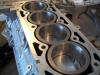
Changing the pistons and not the sleeves, not saying it's going to happen, but I HOPE his sleeves don't crack.
I have noticed that A LOT of people who change there pistons and not there sleeves at the same time have cracked there sleeves shortly after
Yeah no sleeves + aftermarket pistons have been equalling cracked sleeve but I believe Area is already on the smallest pulley? and with the ported head it should be easier on everything with less pressure but we'll see
.
I have noticed that A LOT of people who change there pistons and not there sleeves at the same time have cracked there sleeves shortly after
Yeah no sleeves + aftermarket pistons have been equalling cracked sleeve but I believe Area is already on the smallest pulley? and with the ported head it should be easier on everything with less pressure but we'll see
.
Last edited by Cefaln452; Mar 11, 2010 at 01:57 PM. Reason: Automerged Doublepost

Senior Member
Joined: 11-06-06
Posts: 992
Likes: 0
From: Pontypool, Ontario



Senior Member
Joined: 11-06-06
Posts: 992
Likes: 0
From: Pontypool, Ontario
Okay so lets say you are runnin 15psi and then you port your head and you now you are at say 11 why is it that most people would then crank boost to 15psi again with the asumption that is a safe psi? Is that incorrect thinking?



Senior Member
Joined: 10-06-05
Posts: 10,944
Likes: 2
From: Seneca, South Carolina
That's a very generic description, but you get the point.

Senior Member
Joined: 11-06-06
Posts: 992
Likes: 0
From: Pontypool, Ontario
they turn the boost back up because they are now flowing MORE air at the SAME boost level. 15 psi before the head work might have flowed something like 400cfm(just a random number). After the port work the boost drops to 11psi and you pick up some cfm, say 450cfm now. So you crank the boost back up to 15 and now you are churning 700cfm. More power at the same boost level.
That's a very generic description, but you get the point.
That's a very generic description, but you get the point.
Yeah I get that but I was under the impression that after you port your head it is safer to crank the boost back up to say 15psi. According to what Blazins description that would be an inaccurate way of thinking? Because the cylinder pressure would still be greater after porting the head and then turning the boost to the same psi?


Senior Member
Joined: 10-06-05
Posts: 10,944
Likes: 2
From: Seneca, South Carolina
Yeah I get that but I was under the impression that after you port your head it is safer to crank the boost back up to say 15psi. According to what Blazins description that would be an inaccurate way of thinking? Because the cylinder pressure would still be greater after porting the head and then turning the boost to the same psi?
Senior Member
Joined: 11-06-06
Posts: 992
Likes: 0
From: Pontypool, Ontario
No I was simply confused and no one actually answered my question other than the original one I had. I was going off of the common misconception that if say you were told your engine could only handle 15psi then you port your head and its 11psi it is safe again to crank to 15psi where as really because the head flows better more total air is being pumped through creating more strain on your engine. More air more hp more strain
Senior Member
Joined: 05-01-06
Posts: 4,976
Likes: 2
From: West Coast, FL
Engine failure, in the sense you are speaking of, is a function of power produced. I would think the closest related term you've seen used here for our typical engine failure is cylinder pressure. This is totally unrelated to boost pressure. If an engine's volumetric efficiency goes up, creating a situation with less boost at the same flow, turning up the boost will increase the engine's output and increase the chances of engine failure.
"More air, more HP, more strain" is correct if you turn the boost up. If you do not turn up the boost, the engine is actually more safe, as a byproduct of boost (flow restriction) is heat...
"More air, more HP, more strain" is correct if you turn the boost up. If you do not turn up the boost, the engine is actually more safe, as a byproduct of boost (flow restriction) is heat...
Senior Member
Joined: 11-06-06
Posts: 992
Likes: 0
From: Pontypool, Ontario
Engine failure, in the sense you are speaking of, is a function of power produced. I would think the closest related term you've seen used here for our typical engine failure is cylinder pressure. This is totally unrelated to boost pressure. If an engine's volumetric efficiency goes up, creating a situation with less boost at the same flow, turning up the boost will increase the engine's output and increase the chances of engine failure.
"More air, more HP, more strain" is correct if you turn the boost up. If you do not turn up the boost, the engine is actually more safe, as a byproduct of boost (flow restriction) is heat...
"More air, more HP, more strain" is correct if you turn the boost up. If you do not turn up the boost, the engine is actually more safe, as a byproduct of boost (flow restriction) is heat...


