


2007 lsj with TVS


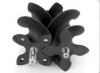
adj cam gears would be used if the cam event timing is off. if the event timing is off you can loose hp generaly if you deviate from the specified cam event timing you loose power here is a short on why to degree a cam
Talk to any cam grinder, engine builder, or racer and you’ll find overwhelming agreement that “degreeing-in” a camshaft is a vital step along the route to optimum engine performance. At first that may seem strange because “degreeing-in” a cam pertains to checking the accuracy with which it was manufactured.
The purpose of degreeing a cam is to insure that the cam is phased correctly with the crankshaft, per the cam manufacturers’ specifications. You’re insuring that valve opening and closing events are in accordance with specifications, regardless of the cause. Actual valve opening and closing events are influenced not only by accuracy with which a cam was ground, but also keyway position in the crankshaft, crank timing sprocket, dowel pin hole position in the cam sprocket, and accumulation of machine tolerance also play a major role.
and so far from what i have seen the cam timing isent off enough to make a difference so adj gear on stock cams wont do **** and the zzp cams are checked before they leave zzp to ensure the specs are accurate
Talk to any cam grinder, engine builder, or racer and you’ll find overwhelming agreement that “degreeing-in” a camshaft is a vital step along the route to optimum engine performance. At first that may seem strange because “degreeing-in” a cam pertains to checking the accuracy with which it was manufactured.
The purpose of degreeing a cam is to insure that the cam is phased correctly with the crankshaft, per the cam manufacturers’ specifications. You’re insuring that valve opening and closing events are in accordance with specifications, regardless of the cause. Actual valve opening and closing events are influenced not only by accuracy with which a cam was ground, but also keyway position in the crankshaft, crank timing sprocket, dowel pin hole position in the cam sprocket, and accumulation of machine tolerance also play a major role.
and so far from what i have seen the cam timing isent off enough to make a difference so adj gear on stock cams wont do **** and the zzp cams are checked before they leave zzp to ensure the specs are accurate
But to go against your stance, dialing in the power with cam gears is what you are going to do once you have your cams and everything else all set up if you want to have the best times on the track. You dont dial it in for max power. You dial it in to have the most area under the curve in the rev range you use while in gear.
Yes very much so. The old scirroco actually had cam timing variances of ~7* from the factory depending on the tolerance on deck height of the engine. Meaning you could get a torque monster than ran out of steam or a screamer that was gutless off the line.
But to go against your stance, dialing in the power with cam gears is what you are going to do once you have your cams and everything else all set up if you want to have the best times on the track. You dont dial it in for max power. You dial it in to have the most area under the curve in the rev range you use while in gear.
But to go against your stance, dialing in the power with cam gears is what you are going to do once you have your cams and everything else all set up if you want to have the best times on the track. You dont dial it in for max power. You dial it in to have the most area under the curve in the rev range you use while in gear.
Not always. Especially if you've raised your redline to 8 or 9 grand. The cam lobe center of even a cam that was made from fresh blanks is likely not set perfect and one that is from a re-grind would be no where close. If you rev to 8 you really dont worry too much about power below 4 grand because you'll only see it when you leave the line, if you're not wheel spinning and slipping the clutch through it anyways. The only way you would not need cam gears is if you got billet cams made by someone who had already made a ton of cams for that same setup and knew exactly where all the cam timing events had to be in relation to each other to work just right. There's a good bit of math into cams but theres also a good bit of just needing empirical data on the exact setup you have.

Most of these cams are ground by comp cams they do the very best work day in/day out no doubt.
Peeps keep talking about this magic power under the curve. WTF is power under the curve?
Peeps keep talking about this magic power under the curve. WTF is power under the curve?

its the average power level. Though technically its the differential of the function formed by the horsepower curve. Like if you have a car that operates in the 4000 to 8000 rpm range and have 2 motor choices. One that makes peak power of 400 hp at 8 grand and makes 200 hp at 4 grand with a straight line between the 2 points the area under the curve is going to be 1200000 hp*rpm. Now if you have a car that makes 300 horse at 4000 rpm and makes 350 horse at 8000 rpm it has an area under the curve of 1300000 hp*rm. Thus even though it has a lower peak horse power number it will be faster in racing conditions.
Shouldnt you know this already?
Shouldnt you know this already?
Not always. Especially if you've raised your redline to 8 or 9 grand. The cam lobe center of even a cam that was made from fresh blanks is likely not set perfect and one that is from a re-grind would be no where close. If you rev to 8 you really dont worry too much about power below 4 grand because you'll only see it when you leave the line, if you're not wheel spinning and slipping the clutch through it anyways. The only way you would not need cam gears is if you got billet cams made by someone who had already made a ton of cams for that same setup and knew exactly where all the cam timing events had to be in relation to each other to work just right. There's a good bit of math into cams but theres also a good bit of just needing empirical data on the exact setup you have.

New Member
Joined: 06-01-10
Posts: 84
Likes: 0
From: Apple Valley
heres the wiki i read.
SS Supercharged
Available as a coupe only, the SS Supercharged featured the 2.0 L LSJ Ecotec engine with an Eaton M62 Roots type supercharger and air-to-liquid intercooler.[2] The engine makes 205 hp (153 kW) at 5600 rpm and 200 lb·ft (271 N·m) at 4400 rpm.[8] 18-inch broad-spoke wheels with P215/45R18 summer Pirelli tires are standard. Optional for the LSJ was a performance package coded G85 that added Recaro bucket seats and a limited slip differential (LSD). LSD was optional for 2005 models (performance package came with LSD) and was standard in 2006 + models. The G85 option continues in the LNF Cobalt, but adds only the LSD. The car has become notable for a high profile spoiler that was standard in 2005, but optional from 2007 when a lower profile spoiler used on all other Cobalt coupes became an option.[11]

I made 280Whp with just the mods in my sig. i still have much room to grow. More cooling mods being stage 3 heat exchanger, dual pass, option b, plus i'm still catted so could gain a few horse from that. add a catback and still have room to drop on pulley sizes and that 280whp was at like 67 degrees so imagine if it woulda been about 45 degrees.

correct me if I'm wrong, lsd was stock option in 06-07.
heres the wiki i read.
SS Supercharged
Available as a coupe only, the SS Supercharged featured the 2.0 L LSJ Ecotec engine with an Eaton M62 Roots type supercharger and air-to-liquid intercooler.[2] The engine makes 205 hp (153 kW) at 5600 rpm and 200 lb·ft (271 N·m) at 4400 rpm.[8] 18-inch broad-spoke wheels with P215/45R18 summer Pirelli tires are standard. Optional for the LSJ was a performance package coded G85 that added Recaro bucket seats and a limited slip differential (LSD). LSD was optional for 2005 models (performance package came with LSD) and was standard in 2006 + models. The G85 option continues in the LNF Cobalt, but adds only the LSD. The car has become notable for a high profile spoiler that was standard in 2005, but optional from 2007 when a lower profile spoiler used on all other Cobalt coupes became an option.[11]
heres the wiki i read.
SS Supercharged
Available as a coupe only, the SS Supercharged featured the 2.0 L LSJ Ecotec engine with an Eaton M62 Roots type supercharger and air-to-liquid intercooler.[2] The engine makes 205 hp (153 kW) at 5600 rpm and 200 lb·ft (271 N·m) at 4400 rpm.[8] 18-inch broad-spoke wheels with P215/45R18 summer Pirelli tires are standard. Optional for the LSJ was a performance package coded G85 that added Recaro bucket seats and a limited slip differential (LSD). LSD was optional for 2005 models (performance package came with LSD) and was standard in 2006 + models. The G85 option continues in the LNF Cobalt, but adds only the LSD. The car has become notable for a high profile spoiler that was standard in 2005, but optional from 2007 when a lower profile spoiler used on all other Cobalt coupes became an option.[11]
the only way you would be correct is they put the wrong cam spec sheet in the box , you can raise the limiter all you want if the cam wont make power there you can adj it all you want it wont help. as for billit cams they dont make anymore power then a cinterd iron core the only time you need a billet core is when the spring pressure is out of this world as for the zzp cams all that is ground into the cam so it is drop in and tune they are ground by comp to zzp specs
And billet cams have other advantages such as being able to be made hollow for reduction in weight.

Senior Member
Joined: 06-08-05
Posts: 18,529
Likes: 1
From: Pittsburgh
correct me if I'm wrong, lsd was stock option in 06-07.
heres the wiki i read.
SS Supercharged
Available as a coupe only, the SS Supercharged featured the 2.0 L LSJ Ecotec engine with an Eaton M62 Roots type supercharger and air-to-liquid intercooler.[2] The engine makes 205 hp (153 kW) at 5600 rpm and 200 lb·ft (271 N·m) at 4400 rpm.[8] 18-inch broad-spoke wheels with P215/45R18 summer Pirelli tires are standard. Optional for the LSJ was a performance package coded G85 that added Recaro bucket seats and a limited slip differential (LSD). LSD was optional for 2005 models (performance package came with LSD) and was standard in 2006 + models. The G85 option continues in the LNF Cobalt, but adds only the LSD. The car has become notable for a high profile spoiler that was standard in 2005, but optional from 2007 when a lower profile spoiler used on all other Cobalt coupes became an option.[11]
heres the wiki i read.
SS Supercharged
Available as a coupe only, the SS Supercharged featured the 2.0 L LSJ Ecotec engine with an Eaton M62 Roots type supercharger and air-to-liquid intercooler.[2] The engine makes 205 hp (153 kW) at 5600 rpm and 200 lb·ft (271 N·m) at 4400 rpm.[8] 18-inch broad-spoke wheels with P215/45R18 summer Pirelli tires are standard. Optional for the LSJ was a performance package coded G85 that added Recaro bucket seats and a limited slip differential (LSD). LSD was optional for 2005 models (performance package came with LSD) and was standard in 2006 + models. The G85 option continues in the LNF Cobalt, but adds only the LSD. The car has become notable for a high profile spoiler that was standard in 2005, but optional from 2007 when a lower profile spoiler used on all other Cobalt coupes became an option.[11]
It was not there from the factory. If you don't have G85 the car didn't come with an LSD from the factory.

open end diff will sometimes spin both wheels, but the second one is unloaded the dominant one will keep spinning and the other will stop. just because u leave two skid marks doesnt mean you have an lsd trans.

Look in the trunk beside the spare tire well there should be a sticker with listed options look for g85. In 2007 some later ones did not come with recaro seats as part of the g85. I know this because I have fought the debate and I have an 07 with G85 no recaro.

Joined: 12-30-07
Posts: 14,079
Likes: 197
From: NEPA
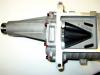
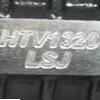
The best way to tell if your trans has a LSD is to look at the I.D. tag on the top of the trans.



Thread
Thread Starter
Forum
Replies
Last Post
agentirons
Electronics, Audio, and Video
2
Oct 16, 2015 02:11 AM
Jesse
Problems/Service/Maintenance
2
Sep 28, 2015 12:51 PM