


bates sleeved blocks

LSJ/L61 = Gen I
LE5/LNF = Gen II

Over the years, GM's Ecotec line of engines has by and large been seen as nothing more than an economical and reliable underhood offering. But with its "Gen II" revision that debuted with the 2.4L LE5 engine, GM drew upon experience racing the Ecotec engine family and built in strength to handle extra horsepower, with thickness being added to the main bearing bulkheads, cylinder bore walls, and other areas.
LSJ/L61 = Gen I
LE5/LNF = Gen II
LSJ/L61 = Gen I
LE5/LNF = Gen II
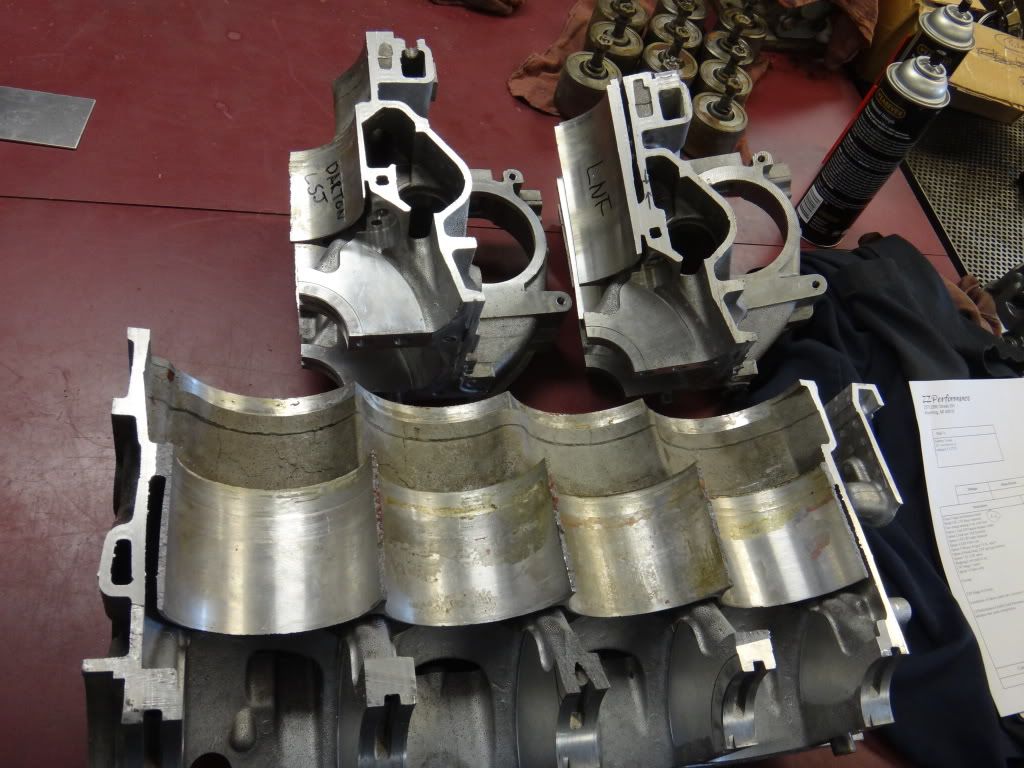
If you look at the picture below, see the 2 arrows facing eachother on the Gen 2 block? That is a point where the block cracked. As reference, you can see where GM attached the support to the sleeve in the blocks (gen 1 block in picture is missing top of the sleeve as it's been cut away for the Darton sleeving. The benefit of supporting the block lower is that the entire sleeve is cooled, the downside is that it's not supported except at the bottom. So if sleeving, a Gen 1 block is much better as you're supported in the center of the sleeve vs. the bottom. If girdling, it doesn't matter as much but the Gen 2 block would probably be best as you're supported both top and bottom.
This platform has seen a ton of LSJ block failures at the top of the sleeve but not so many LNF.
Any chance we can see a cut-a-way of your engine girdle?


zoomer came prepared with guns and ammo on this convo ^_^
It's been tossed around that the Gen 2 block is better/stronger but this turns out not to be the case actually. They are just different.
If you look at the picture below, see the 2 arrows facing eachother on the Gen 2 block? That is a point where the block cracked. As reference, you can see where GM attached the support to the sleeve in the blocks (gen 1 block in picture is missing top of the sleeve as it's been cut away for the Darton sleeving. The benefit of supporting the block lower is that the entire sleeve is cooled, the downside is that it's not supported except at the bottom. So if sleeving, a Gen 1 block is much better as you're supported in the center of the sleeve vs. the bottom. If girdling, it doesn't matter as much but the Gen 2 block would probably be best as you're supported both top and bottom.

If you look at the picture below, see the 2 arrows facing eachother on the Gen 2 block? That is a point where the block cracked. As reference, you can see where GM attached the support to the sleeve in the blocks (gen 1 block in picture is missing top of the sleeve as it's been cut away for the Darton sleeving. The benefit of supporting the block lower is that the entire sleeve is cooled, the downside is that it's not supported except at the bottom. So if sleeving, a Gen 1 block is much better as you're supported in the center of the sleeve vs. the bottom. If girdling, it doesn't matter as much but the Gen 2 block would probably be best as you're supported both top and bottom.

Here are some more illustrations of what I'm talking about.
It appears at first glance that the Dartons have cooling holes all through them and they promote cooling that is hampered with the ZZP block girdle. This is not true.
Below are two images of a darton sleeve with the head gasket laid on top. You can see that the gasket blocks cooling to the head, save for the small water passages in the gasket. I won't get into why GM does this here but it's for cooling reasons.


Moving on, we have experienced sleeved cars with cooling issues and noticed that they run hotter than stock vehicles. There is also talk about the differences in a Gen 1 and Gen 2 block. Below I have a sleeved Gen 1 block. The areas in blue are where coolant is traveling. Notice how the cooling on the Gen 1 block covers less than 1/2 of the cylinder bore but on the Gen 2 it covers 2/3 of it? This is the increased cooling discussed on the Gen 2 block.
With sleeves you change things a bit tho. The stock sleeve is only 60 thousands thick. The lower part of the cooled sleeve is a total of .220 thick with the top being .300 thick. .240 is aluminum which cools very well. The Darton sleeve is .280 thick of steel which doesn't transfer heat well. This is where some of the increased cylinder wear comes from and why Darton motors run hotter.
This brings us back to the cars Mr. Darton was bragging about and the GM race vehicles. Guess what? They run filled blocks and methanol and only run for seconds at a time. Methanol burns very, very cool. But here we're building street motors, motors where heat is our enemy.

Last, I'd like to point out the massive weight disadvantage. A Darton sleeve weighs 3 pounds 7 ounces. Your going to add 12 pounds to your build, if you're competitive and want a fast car, 12 pounds is going to make a small difference.

It appears at first glance that the Dartons have cooling holes all through them and they promote cooling that is hampered with the ZZP block girdle. This is not true.
Below are two images of a darton sleeve with the head gasket laid on top. You can see that the gasket blocks cooling to the head, save for the small water passages in the gasket. I won't get into why GM does this here but it's for cooling reasons.
Moving on, we have experienced sleeved cars with cooling issues and noticed that they run hotter than stock vehicles. There is also talk about the differences in a Gen 1 and Gen 2 block. Below I have a sleeved Gen 1 block. The areas in blue are where coolant is traveling. Notice how the cooling on the Gen 1 block covers less than 1/2 of the cylinder bore but on the Gen 2 it covers 2/3 of it? This is the increased cooling discussed on the Gen 2 block.
With sleeves you change things a bit tho. The stock sleeve is only 60 thousands thick. The lower part of the cooled sleeve is a total of .220 thick with the top being .300 thick. .240 is aluminum which cools very well. The Darton sleeve is .280 thick of steel which doesn't transfer heat well. This is where some of the increased cylinder wear comes from and why Darton motors run hotter.
This brings us back to the cars Mr. Darton was bragging about and the GM race vehicles. Guess what? They run filled blocks and methanol and only run for seconds at a time. Methanol burns very, very cool. But here we're building street motors, motors where heat is our enemy.
Last, I'd like to point out the massive weight disadvantage. A Darton sleeve weighs 3 pounds 7 ounces. Your going to add 12 pounds to your build, if you're competitive and want a fast car, 12 pounds is going to make a small difference.
Last edited by Zooomer; Nov 14, 2011 at 03:57 PM.
It's been tossed around that the Gen 2 block is better/stronger but this turns out not to be the case actually. They are just different.
If you look at the picture below, see the 2 arrows facing eachother on the Gen 2 block? That is a point where the block cracked. As reference, you can see where GM attached the support to the sleeve in the blocks (gen 1 block in picture is missing top of the sleeve as it's been cut away for the Darton sleeving. The benefit of supporting the block lower is that the entire sleeve is cooled, the downside is that it's not supported except at the bottom. So if sleeving, a Gen 1 block is much better as you're supported in the center of the sleeve vs. the bottom. If girdling, it doesn't matter as much but the Gen 2 block would probably be best as you're supported both top and bottom.
If you look at the picture below, see the 2 arrows facing eachother on the Gen 2 block? That is a point where the block cracked. As reference, you can see where GM attached the support to the sleeve in the blocks (gen 1 block in picture is missing top of the sleeve as it's been cut away for the Darton sleeving. The benefit of supporting the block lower is that the entire sleeve is cooled, the downside is that it's not supported except at the bottom. So if sleeving, a Gen 1 block is much better as you're supported in the center of the sleeve vs. the bottom. If girdling, it doesn't matter as much but the Gen 2 block would probably be best as you're supported both top and bottom.

Our girdle works well in either block, not sure what I said to impress you otherwise.


Senior Member
Joined: 11-11-10
Posts: 2,563
Likes: 0
From: Yonkers, NY
Still upset that I didn't know you guys before I've purchased my turbo kit sigh sigh sigh
Christian

Joined: 09-29-06
Posts: 20,664
Likes: 217
From: Land of Freedom
Over the years, GM's Ecotec line of engines has by and large been seen as nothing more than an economical and reliable underhood offering. But with its "Gen II" revision that debuted with the 2.4L LE5 engine, GM drew upon experience racing the Ecotec engine family and built in strength to handle extra horsepower, with thickness being added to the main bearing bulkheads, cylinder bore walls, and other areas.
LSJ/L61 = Gen I
LE5/LNF = Gen II
LSJ/L61 = Gen I
LE5/LNF = Gen II


It actually turned out to be very informative. Not much information on Bates but very good technical information from Zooomer concerning sleeving the ecotecs.

ARP studs, if you lifted the head, you should certainly run them.