


self's turbo build



short update... i don't have time to mess with the install, have to go to DC to lobby senate for a week, surgery for a week and training for a week, on top of all the forest fires taking up my weekends. called a local shop that does alot of custom turbo stuff for us and gonna drop the car off to have it installed. estimate @ $40/hour (gave us a good discount on that). then he'll throw it on the dyno and do some logs for me.
had to drop the turbo elbow off at the machinist, he's going to work a bead of some kind of nickel around the edges to flare it out large enough to seal well with the zzp downpipe. on a side note, zzp started putting their flanges on a belt sander to level them off now after welding, so they were straight yay
had to drop the turbo elbow off at the machinist, he's going to work a bead of some kind of nickel around the edges to flare it out large enough to seal well with the zzp downpipe. on a side note, zzp started putting their flanges on a belt sander to level them off now after welding, so they were straight yay
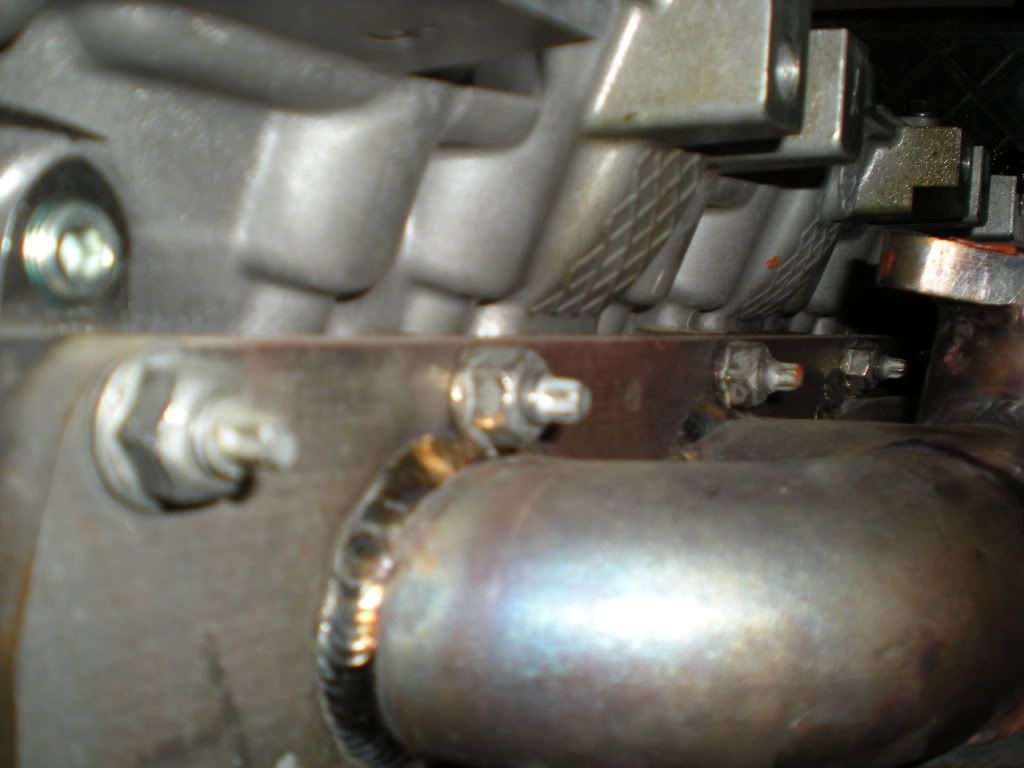
Then i take it to my boy who has a belt sander and what happens its Stainless Steel and the belt sander wont even touch it just shredds belts...
so i take it to a machine shop thinking im gonna have to bite the bullet and pay 45-50 for a re-surface... nope $90 later its finally flat after 3 passes the guy says... ******* zzp.
this isnt even begining to talk about how the welds from the primary are to close and the nuts wont seat fully and theres no room to get a socket on em....
/ rant
i had to grind off the flange on the nuts to get them to thread on, and now they back off cause they are not flush so they cant grip good. I damn sure aint spending more money on something else again lol i have spent like 2k on exh **** over the life of this car...


 ..
..

Thread Starter
Banned
Joined: 06-23-05
Posts: 8,004
Likes: 0
From: ky
found some interesting info on garrett's website today comparing the gt2086rs, gt3076r, gt3582r and the gt3071r installed on a 2.0L motor:
http://www.turbobygarrett.com/turbob...o_tech103.html
We now have enough information to plot these operating points on the compressor map. First we will try a GT2860RS. This turbo has a 60mm, 60 trim compressor wheel.

Clearly this compressor is too small, as both points are positioned far to the right and beyond the compressor’s choke line.
Another potential candidate might be the GT3076R. This turbo has a 76mm, 56 trim compressor wheel:

This is much better; at least both points are on the map! Let’s look at each point in more detail.
For the 2.0L engine this point is in a very efficient area of the map, but since it is in the center of the map, there would be a concern that at a lower engine speeds that it would be near or over the surge line. This might be ok for a high-rpm-biased powerband that might be used on a racing application, but a street application would be better served by a different compressor.
For the 5.0L engine, this looks like a very good street-biased powerband, with the lower engine speeds passing through the highest efficiency zone on the map, and plenty of margin to stay clear of surge. One area of concern would be turbo overspeed when revving the engine past peak power. A larger compressor would place the operating point nearer to the center of the map and would give some additional benefit to a high-rpm-biased powerband. We’ll look at a larger compressor for the 5.0L after we figure out a good street match for the 2.0L engine.
So now lets look at a GT3071R, which uses a 71mm, 56 trim compressor wheel.

For the 2.0L engine, this is a much more mid-range-oriented compressor. The operating point is shifted a bit towards the choke side of the map and this provides additional surge margin. The lower engine speeds will now pass through the higher efficiency zones and give excellent performance and response.
For the 5.0L engine, the compressor is clearly too small and would not be considered.
Now that we have arrived at an acceptable compressor for the 2.0L engine, lets calculate a lower rpm point to put on the map to better get a feel for what the engine operating line will look like. We can calculate this using the following formula:
We’ll choose the engine speed at which we would expect to see peak torque, based on experience or an educated guess. In this case we’ll choose 5000rpm.
Where:
· Wa = Airflowactual (lb/min)
· MAP = Manifold Absolute Pressure (psia) =41.1 psia
· R = Gas Constant = 639.6
· Tm = Intake Manifold Temperature (degrees F) =130
· VE = Volumetric Efficiency = 0.98
· N = Engine speed (RPM) = 5000rpm
· Vd = engine displacement (Cubic Inches, convert from liters to CI by multiplying by 61, ex. 2.0 liters * 61 = 122 CI)
= 32.5 lb/min
Plotting this on the GT3071R compressor map gives the following operating points.

This gives a good representation of the operating line at that boost level, which is well suited to this map. At engine speeds lower than 5000rpm the boost pressure will be lower, and the pressure ratio would be lower, to keep the compressor out of surge.
Back to the 5.0 L engine. Let’s look at a larger compressor’s map. This time we will try a GT3582R with an 82mm, 56 trim compressor.

Here , compared to the GT3076R, we can see that this point is not quite so deep into choke and will give better high-rpm performance than the 76mm wheel. A further increase in wheel size would give even better high-rpm performance, but at the cost of low- and mid-range response and drivability.
Hopefully this has given a basic idea of what a compressor map displays and how to choose a compressor. As you can see, a few simple estimations and calculations can provide a good basis for compressor selection. If real data is available to be substituted in place of estimation, more accurate results can be generated.
http://www.turbobygarrett.com/turbob...o_tech103.html
We now have enough information to plot these operating points on the compressor map. First we will try a GT2860RS. This turbo has a 60mm, 60 trim compressor wheel.
Clearly this compressor is too small, as both points are positioned far to the right and beyond the compressor’s choke line.
Another potential candidate might be the GT3076R. This turbo has a 76mm, 56 trim compressor wheel:
This is much better; at least both points are on the map! Let’s look at each point in more detail.
For the 2.0L engine this point is in a very efficient area of the map, but since it is in the center of the map, there would be a concern that at a lower engine speeds that it would be near or over the surge line. This might be ok for a high-rpm-biased powerband that might be used on a racing application, but a street application would be better served by a different compressor.
For the 5.0L engine, this looks like a very good street-biased powerband, with the lower engine speeds passing through the highest efficiency zone on the map, and plenty of margin to stay clear of surge. One area of concern would be turbo overspeed when revving the engine past peak power. A larger compressor would place the operating point nearer to the center of the map and would give some additional benefit to a high-rpm-biased powerband. We’ll look at a larger compressor for the 5.0L after we figure out a good street match for the 2.0L engine.
So now lets look at a GT3071R, which uses a 71mm, 56 trim compressor wheel.
For the 2.0L engine, this is a much more mid-range-oriented compressor. The operating point is shifted a bit towards the choke side of the map and this provides additional surge margin. The lower engine speeds will now pass through the higher efficiency zones and give excellent performance and response.
For the 5.0L engine, the compressor is clearly too small and would not be considered.
Now that we have arrived at an acceptable compressor for the 2.0L engine, lets calculate a lower rpm point to put on the map to better get a feel for what the engine operating line will look like. We can calculate this using the following formula:
We’ll choose the engine speed at which we would expect to see peak torque, based on experience or an educated guess. In this case we’ll choose 5000rpm.
Where:
· Wa = Airflowactual (lb/min)
· MAP = Manifold Absolute Pressure (psia) =41.1 psia
· R = Gas Constant = 639.6
· Tm = Intake Manifold Temperature (degrees F) =130
· VE = Volumetric Efficiency = 0.98
· N = Engine speed (RPM) = 5000rpm
· Vd = engine displacement (Cubic Inches, convert from liters to CI by multiplying by 61, ex. 2.0 liters * 61 = 122 CI)
= 32.5 lb/min
Plotting this on the GT3071R compressor map gives the following operating points.
This gives a good representation of the operating line at that boost level, which is well suited to this map. At engine speeds lower than 5000rpm the boost pressure will be lower, and the pressure ratio would be lower, to keep the compressor out of surge.
Back to the 5.0 L engine. Let’s look at a larger compressor’s map. This time we will try a GT3582R with an 82mm, 56 trim compressor.
Here , compared to the GT3076R, we can see that this point is not quite so deep into choke and will give better high-rpm performance than the 76mm wheel. A further increase in wheel size would give even better high-rpm performance, but at the cost of low- and mid-range response and drivability.
Hopefully this has given a basic idea of what a compressor map displays and how to choose a compressor. As you can see, a few simple estimations and calculations can provide a good basis for compressor selection. If real data is available to be substituted in place of estimation, more accurate results can be generated.
Thread Starter
Banned
Joined: 06-23-05
Posts: 8,004
Likes: 0
From: ky
did a few things today... installed the 2.2alt and belt system. installed new washer fluid res. in the driver's side. tomorrow extending the tb cable by about 12" so it'll reach the adapter plate, new fuel filter, ottp fuel pump rewire kit and removing the PLX scan and wideband system. replacing that with a new system


tip: just buy the rebel dummy pulley if you do a turbo conversion. the 2.2 swap is a bit of a pain in the ass
tip: just buy the rebel dummy pulley if you do a turbo conversion. the 2.2 swap is a bit of a pain in the ass

That rebel pulley was probably the worst amount of money I spent during my entire build. It's at least 3/8'' off towards the passenger side if not a little more. Had to cut out the top support bar in order for the belt to clear. You have to run 2 stock size tensioner pulleys or else it takes 30 minutes and 3 guys to get the belt on :P haha Not worth the money at all if you ask me. I'll paobably switch over to the 2.2 belt and tensioner here soon. I have it just need to get around to welding the alternator. Then there is so much more room anyways.
Only reason I haven't changed it so far is because I thought I was going to twin charge but zzp won't really give me any useful information. They just want me to either drive to michigan or buy an s256 e/t off them lol I don't blame them at all but I thought they would have helped out a loyal customer just a bit more. haha I do love those guys tho.
The build is looking good man!
Only reason I haven't changed it so far is because I thought I was going to twin charge but zzp won't really give me any useful information. They just want me to either drive to michigan or buy an s256 e/t off them lol I don't blame them at all but I thought they would have helped out a loyal customer just a bit more. haha I do love those guys tho.
The build is looking good man!
Thread Starter
Banned
Joined: 06-23-05
Posts: 8,004
Likes: 0
From: ky
gotta look at the whole picture...
2.2 tensioner requires removing the mount, removing alternator brackets, rewiring the alternator plug, getting a different alternator, different belt, dealing with a tensioner that requires you to remove the mount to switch the belt etc...
it's much easier just to put on a dummy pulley
2.2 tensioner requires removing the mount, removing alternator brackets, rewiring the alternator plug, getting a different alternator, different belt, dealing with a tensioner that requires you to remove the mount to switch the belt etc...
it's much easier just to put on a dummy pulley


Senior Member
Joined: 09-25-08
Posts: 5,384
Likes: 0
From: Depew, NY
found some interesting info on garrett's website today comparing the gt2086rs, gt3076r, gt3582r and the gt3071r installed on a 2.0L motor:
http://www.turbobygarrett.com/turbob...o_tech103.html
http://www.turbobygarrett.com/turbob...o_tech103.html
It's not hosted any more since no one was interested. Let me know if you want some maps plotted.
Senior Member
Joined: 09-25-08
Posts: 5,384
Likes: 0
From: Depew, NY
Let me see if I can find some maps for those.
I don't get why everyone humps the borg warner turbo's either. There's much better options that will destroy there flow and spool times.
I don't get why everyone humps the borg warner turbo's either. There's much better options that will destroy there flow and spool times.
Last edited by slowswap; Apr 24, 2010 at 10:21 PM. Reason: Automerged Doublepost

But i do agree there are better performing turbo's. and cheaper ones too.
i like hx builds, seems very promising for the budget minded.
That rebel pulley was probably the worst amount of money I spent during my entire build. It's at least 3/8'' off towards the passenger side if not a little more. Had to cut out the top support bar in order for the belt to clear. You have to run 2 stock size tensioner pulleys or else it takes 30 minutes and 3 guys to get the belt on :P haha Not worth the money at all if you ask me. I'll paobably switch over to the 2.2 belt and tensioner here soon. I have it just need to get around to welding the alternator. Then there is so much more room anyways.
Only reason I haven't changed it so far is because I thought I was going to twin charge but zzp won't really give me any useful information. They just want me to either drive to michigan or buy an s256 e/t off them lol I don't blame them at all but I thought they would have helped out a loyal customer just a bit more. haha I do love those guys tho.
The build is looking good man!
Only reason I haven't changed it so far is because I thought I was going to twin charge but zzp won't really give me any useful information. They just want me to either drive to michigan or buy an s256 e/t off them lol I don't blame them at all but I thought they would have helped out a loyal customer just a bit more. haha I do love those guys tho.
The build is looking good man!
pm me.
Last edited by hungryhip-ccp; Apr 28, 2010 at 01:42 AM. Reason: Automerged Doublepost

