2.0 LSJ Engine: Return-style fuel system for 2.0 LSJ


I was going to ask him about that. I assume that his IDCs are not bad if he said he would upgrade the fuel pump. But still a good question if running from the stock fuel pump.

Wish me luck guys, this will be installed, hopefully this week.

Check Valve Flapper Style Fitting Size 6 Reinforced Viton® w/Aluminum Support 150 PSI Max. 0.5 PSI To Seal Red Anodized Aluminum (Viton® is a registered trademark of DuPont Performance Elastomers)
Check Valve Flapper Style Fitting Size 6 Reinforced Viton® w/Aluminum Support 150 PSI Max. 0.5 PSI To Seal Red Anodized Aluminum (Viton® is a registered trademark of DuPont Performance Elastomers)


Senior Member
Joined: 06-28-06
Posts: 12,577
Likes: 2
From: Canada
Im open to the possibillity of it helping....
but im doubtful.
http://www.chevyhiperformance.com/te...fferences.html
The benefits of a dynamic, return-style fuel system are longer pump life, the elimination of unwanted pressure drops, a marked increase in pump-to-horsepower ratings, and quieter pump operation ( I don't agree with this) . This all means that a dynamic system allows for a more consistent air/fuel ratio across the rpm band and more predictable power all the way down. The only drawback to a dynamic system is the increased cost of fittings and lines.
Some advantages (from forums)
http://stevesnovasite.com/forums/showthread.php?t=77818
I. They keep the pump cooler, keep the fuel cooler (I think this is entering, not returning to tank), help the pump live longer due to no strain on the pump, eliminate pressure creep, and you can leave the pump on to set your fuel pressure while the engine is not running.
Point against I- fuel returns to the tank heated.
II. I've run them for a long time now and on several cars. Originally I thought better pressure control and cooler fuel or more constant temp fuel. Now I like the idea that the fuel is moving all the time and doesn't have to start and stop in the lines.
III. Another befit is more stable fuel pressure with less spikes and pressure drop during sudden fuel demand (like nitrous applications)
IV. The benefits to a return style fuel system are consistent fuel pressure with no tendency to idle surge. With the returnless stock system, there can be a sudden drop in pressure when the throttle is dropped. Not a good thing. This problem would be more apparent on larger injectors. Me personally, I think anything pushing over 300 to the wheels *should* have a return style system. While not necessarily always the case (as there are examples that push this), it's good advice nonetheless
*IV- It definitely depends on the WHP goal
Disadvantage on return-style fuel system (very good info)
http://www.aa1car.com/library/returnless_efi.htm
From DragSport.com
http://www.dragsport.com/issue/2006/...er_story.shtml
For going beyond the 450 wheel horsepower levels, SFR recommends a conversion to a return-style fuel system.
On another note (about external pumps)
The benefits of a GM style in-tank electric system over a traditional aftermarket external fuel pump are quiet operation, lower cost, and increased safety.
Paul should be able to verify after completing the installation of the return-style if IDC's are down. I think they will fall to a considerable level.
The benefits of a dynamic, return-style fuel system are longer pump life, the elimination of unwanted pressure drops, a marked increase in pump-to-horsepower ratings, and quieter pump operation ( I don't agree with this) . This all means that a dynamic system allows for a more consistent air/fuel ratio across the rpm band and more predictable power all the way down. The only drawback to a dynamic system is the increased cost of fittings and lines.
Some advantages (from forums)
http://stevesnovasite.com/forums/showthread.php?t=77818
I. They keep the pump cooler, keep the fuel cooler (I think this is entering, not returning to tank), help the pump live longer due to no strain on the pump, eliminate pressure creep, and you can leave the pump on to set your fuel pressure while the engine is not running.
Point against I- fuel returns to the tank heated.
II. I've run them for a long time now and on several cars. Originally I thought better pressure control and cooler fuel or more constant temp fuel. Now I like the idea that the fuel is moving all the time and doesn't have to start and stop in the lines.
III. Another befit is more stable fuel pressure with less spikes and pressure drop during sudden fuel demand (like nitrous applications)
IV. The benefits to a return style fuel system are consistent fuel pressure with no tendency to idle surge. With the returnless stock system, there can be a sudden drop in pressure when the throttle is dropped. Not a good thing. This problem would be more apparent on larger injectors. Me personally, I think anything pushing over 300 to the wheels *should* have a return style system. While not necessarily always the case (as there are examples that push this), it's good advice nonetheless
*IV- It definitely depends on the WHP goal
Disadvantage on return-style fuel system (very good info)
http://www.aa1car.com/library/returnless_efi.htm
From DragSport.com
http://www.dragsport.com/issue/2006/...er_story.shtml
For going beyond the 450 wheel horsepower levels, SFR recommends a conversion to a return-style fuel system.
On another note (about external pumps)
The benefits of a GM style in-tank electric system over a traditional aftermarket external fuel pump are quiet operation, lower cost, and increased safety.
Paul should be able to verify after completing the installation of the return-style if IDC's are down. I think they will fall to a considerable level.
hopefully man, still stuck with the cobalt as a daily drivier, stupid jeep has an out of state salvage title and I can't register it in NY for 2-3 months, pickin up a non running one this week and will be doing a full drivetrain swap on it over the weekend, hopefully have it on the road monday, and drop off the cobalt monday night to start on the fuel system and the clutch
Senior Member
Joined: 06-28-06
Posts: 12,577
Likes: 2
From: Canada
quoting posts from another forum doesnt really appear to be proof of anything....
and saying that its useful above 450hp doesnt really help either...
I know the positives and negatives of both systems.
I just dont see how the cost justifies any percieved improvement to a 250-350hp cobalt.
which is where 99.9 percent of cobalt owners on this site will spend their lives.
and saying that its useful above 450hp doesnt really help either...
I know the positives and negatives of both systems.
I just dont see how the cost justifies any percieved improvement to a 250-350hp cobalt.
which is where 99.9 percent of cobalt owners on this site will spend their lives.

Senior Member
Joined: 07-24-05
Posts: 1,095
Likes: 0
From: mt kisco,ny
Question.Couldnt you just swap in a fuel rail from an older ecotec with a fuel return line,replace the stock fuel regulator and replace it with an accel adj fpr?Atlest those regulators wont require you to prime the system everytime you start the car.And for the return,cant you just tap it into the fill tube so it drains back into the tank?
quoting posts from another forum doesnt really appear to be proof of anything....
and saying that its useful above 450hp doesnt really help either...
I know the positives and negatives of both systems.
I just dont see how the cost justifies any percieved improvement to a 250-350hp cobalt.
which is where 99.9 percent of cobalt owners on this site will spend their lives.
and saying that its useful above 450hp doesnt really help either...
I know the positives and negatives of both systems.
I just dont see how the cost justifies any percieved improvement to a 250-350hp cobalt.
which is where 99.9 percent of cobalt owners on this site will spend their lives.
Question.Couldnt you just swap in a fuel rail from an older ecotec with a fuel return line,replace the stock fuel regulator and replace it with an accel adj fpr?Atlest those regulators wont require you to prime the system everytime you start the car.And for the return,cant you just tap it into the fill tube so it drains back into the tank?
Yes you can use a 2002 Ecotec fuel rail. It comes already tapped. About "accel adj fpr" haven't seen those. About tapping into the fill tube, its very difficult. Still, my final option here is the Earl Performance check valve which I hope do the job.
quoting posts from another forum doesnt really appear to be proof of anything....
and saying that its useful above 450hp doesnt really help either...
I know the positives and negatives of both systems.
I just dont see how the cost justifies any percieved improvement to a 250-350hp cobalt.
which is where 99.9 percent of cobalt owners on this site will spend their lives.
and saying that its useful above 450hp doesnt really help either...
I know the positives and negatives of both systems.
I just dont see how the cost justifies any percieved improvement to a 250-350hp cobalt.
which is where 99.9 percent of cobalt owners on this site will spend their lives.
Last edited by jgarciarivera; Feb 19, 2008 at 08:00 PM. Reason: Automerged Doublepost
Senior Member
Joined: 06-28-06
Posts: 12,577
Likes: 2
From: Canada
You just mentioned it. This is not for medium power applications (like you said 250-350hp). I agree with you. As I said already, in my case, the reason was fuel starvation, creating KR. Still I will be upgrading the supercharger so I'm sure up to 500HP will be supported from my fuel pump.
k im with ya.
i can definately see how it would probably help at those kinds of power levels.
Senior Member
Joined: 07-24-05
Posts: 1,095
Likes: 0
From: mt kisco,ny
Good question. For the return-style to work it was necessary to take out the in-tank regulator. One way this will perfectly work is if the fuel regulator should provide a way to hold the fuel after the car is turned off.
Yes you can use a 2002 Ecotec fuel rail. It comes already tapped. About "accel adj fpr" haven't seen those. About tapping into the fill tube, its very difficult. Still, my final option here is the Earl Performance check valve which I hope do the job.
Yes you can use a 2002 Ecotec fuel rail. It comes already tapped. About "accel adj fpr" haven't seen those. About tapping into the fill tube, its very difficult. Still, my final option here is the Earl Performance check valve which I hope do the job.
It doesnt mention the ecotec,but its a direct fit.I had one in my z24.It was a non ecotec,but i never had a problem with having to prime the pump to start it.I had the same regulator,but it was a different part number because the mounting tab was on the opposite side than the one for the ecotec.It has a little hex screw on the top that adjusts the fuel pressure from 25psi-60psi.Hopefully it helps some of you guys out.

Senior Member
Joined: 02-05-06
Posts: 727
Likes: 0
From: Kakabeka Falls, Ontario
Another way to do it is to not run the high pressure supply directly to the rail. You could run the supply to the regulator, then the reguator will supply the rail with constant pressure. The bleed off from the regulator will get dumped back into the tank. This way, there is only one line, under constant, manifold-referenced pressure to the fuel rail. The return line and supply line are connected to the regulator itself. In my mind, this is The better setup.
-P
-P

Senior Member
Joined: 09-21-06
Posts: 2,270
Likes: 1
From: Midwest
Another way to do it is to not run the high pressure supply directly to the rail. You could run the supply to the regulator, then the reguator will supply the rail with constant pressure. The bleed off from the regulator will get dumped back into the tank. This way, there is only one line, under constant, manifold-referenced pressure to the fuel rail. The return line and supply line are connected to the regulator itself. In my mind, this is The better setup.
-P
-P
http://store.summitracing.com/partde...5&autoview=sku
It doesnt mention the ecotec,but its a direct fit.I had one in my z24.It was a non ecotec,but i never had a problem with having to prime the pump to start it.I had the same regulator,but it was a different part number because the mounting tab was on the opposite side than the one for the ecotec.It has a little hex screw on the top that adjusts the fuel pressure from 25psi-60psi.Hopefully it helps some of you guys out.
It doesnt mention the ecotec,but its a direct fit.I had one in my z24.It was a non ecotec,but i never had a problem with having to prime the pump to start it.I had the same regulator,but it was a different part number because the mounting tab was on the opposite side than the one for the ecotec.It has a little hex screw on the top that adjusts the fuel pressure from 25psi-60psi.Hopefully it helps some of you guys out.
Another way to do it is to not run the high pressure supply directly to the rail. You could run the supply to the regulator, then the reguator will supply the rail with constant pressure. The bleed off from the regulator will get dumped back into the tank. This way, there is only one line, under constant, manifold-referenced pressure to the fuel rail. The return line and supply line are connected to the regulator itself. In my mind, this is The better setup.
-P
-P

I see. Thanks for clarifying.
Last edited by jgarciarivera; Feb 19, 2008 at 09:03 PM. Reason: Automerged Doublepost
Senior Member
Joined: 02-05-06
Posts: 727
Likes: 0
From: Kakabeka Falls, Ontario

Tank > Feed > Rail > Regulator > Tank
I want to hook it up like this:
Tank > Feed > Regulator > Tank
.............................v
...........................Rail
Clear as mud?
[QUOTE=jgarciarivera;1978493]I'm kind of confused. My setup is like you're saying above. From the fuel pump to the regulator, then from the regulator to the fuel rail. The fuel not used goes from the outlet of the regulator (which is underneath it) to the tank. I have only one line to the fuel rail. I have the both return and supply connected to the regulator. So the setup you're thinking I already installed in my car
So why do you need to tap the fuel rail?? What did you do wuth the other feed from the deadhead setup on the car??
Last edited by Pully Police; Feb 19, 2008 at 09:08 PM. Reason: Automerged Doublepost
Senior Member
Joined: 02-05-06
Posts: 727
Likes: 0
From: Kakabeka Falls, Ontario
[QUOTE=Pully Police;1978512]Yeah...It would be easier to draw a pic. But the OP in this thread *looks* to have his system hooked up like this: EDIT: GUESS I NEED BETTER EYES
Tank > Feed > Rail > Regulator > Tank
I want to hook it up like this:
Tank > Feed > Regulator > Tank
.............................v
...........................Rail
Clear as mud?
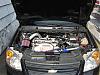
by any chance are you referring to the line to the side of the motor oil cap in the picture below?

Oh BTW, now I understand you're setup
Tank > Feed > Rail > Regulator > Tank
I want to hook it up like this:
Tank > Feed > Regulator > Tank
.............................v
...........................Rail
Clear as mud?
I'm kind of confused. My setup is like you're saying above. From the fuel pump to the regulator, then from the regulator to the fuel rail. The fuel not used goes from the outlet of the regulator (which is underneath it) to the tank. I have only one line to the fuel rail. I have the both return and supply connected to the regulator. So the setup you're thinking I already installed in my car
So why do you need to tap the fuel rail?? What did you do wuth the other feed from the deadhead setup on the car??
So why do you need to tap the fuel rail?? What did you do wuth the other feed from the deadhead setup on the car??
Oh BTW, now I understand you're setup
Senior Member
Joined: 02-05-06
Posts: 727
Likes: 0
From: Kakabeka Falls, Ontario
[QUOTE=jgarciarivera;1978613]
YEAH!! Why is that line there???
Yeah...It would be easier to draw a pic. But the OP in this thread *looks* to have his system hooked up like this: EDIT: GUESS I NEED BETTER EYES
Tank > Feed > Rail > Regulator > Tank
I want to hook it up like this:
Tank > Feed > Regulator > Tank
.............................v
...........................Rail
Clear as mud?
by any chance are you referring to the line to the side of the motor oil cap in the picture below?
Oh BTW, now I understand you're setup
Tank > Feed > Rail > Regulator > Tank
I want to hook it up like this:
Tank > Feed > Regulator > Tank
.............................v
...........................Rail
Clear as mud?
by any chance are you referring to the line to the side of the motor oil cap in the picture below?
Oh BTW, now I understand you're setup
Why is that line there???