


Possible Intercooler Pump Upgrade (Pump Information)


I just laughed at you. Out loud.
The rate of heat transfer is directly related to delta temp between the fluid temp and air temp. The larger the delta the more heat can transfer and at a faster rate. So yes, a slower pump can cool better than one that is too fast.
fizzix
The reason a faster pump will work well for Paul is because of the massive cooling capacity he has up front, which can adequately drop the coolant temp while at a high flow rate.
The rate of heat transfer is directly related to delta temp between the fluid temp and air temp. The larger the delta the more heat can transfer and at a faster rate. So yes, a slower pump can cool better than one that is too fast.
fizzix
The reason a faster pump will work well for Paul is because of the massive cooling capacity he has up front, which can adequately drop the coolant temp while at a high flow rate.


Senior Member
Joined: 03-07-06
Posts: 942
Likes: 0
From: Nassau County Long Island NY
I just laughed at you. Out loud.
The rate of heat transfer is directly related to delta temp between the fluid temp and air temp. The larger the delta the more heat can transfer and at a faster rate. So yes, a slower pump can cool better than one that is too fast.
fizzix
The reason a faster pump will work well for Paul is because of the massive cooling capacity he has up front, which can adequately drop the coolant temp while at a high flow rate.
The rate of heat transfer is directly related to delta temp between the fluid temp and air temp. The larger the delta the more heat can transfer and at a faster rate. So yes, a slower pump can cool better than one that is too fast.
fizzix
The reason a faster pump will work well for Paul is because of the massive cooling capacity he has up front, which can adequately drop the coolant temp while at a high flow rate.
I did not. Reading comprehension > you.
How about instead of being an ass, you re-read and learn something.
Moving fluid faster, with no other changes, decreases delta temp which decreases the rate of heat transfer.
How about instead of being an ass, you re-read and learn something.
Moving fluid faster, with no other changes, decreases delta temp which decreases the rate of heat transfer.

Then explain it using equations, because right now you're only stating opinions. General rule of thumb increase fluid flow to increase heat transfer rate if water or if air.

Senior Member
Joined: 03-07-06
Posts: 942
Likes: 0
From: Nassau County Long Island NY
You said earlier the greater the delta between the fluid and the air will transfer heat faster. That statement proves my point. If you have a pump that flows fluid slowly through the intercooler it will cause the fluid to heat up. As this fluid heats up it loses its abilty to pull heat as fast as it could when it first entered the intercooler.
Q: Why do people run a dual pass endplate vs a stock one?
A: The fresh cold fluid spends less time in the intercooler keeping the delta between the air and the fluid as high as possible pulling the most heat possible out of the charge.
If we run a high flow pump it helps to keep the fluid from heating up. This keeps the delta between the fluid and air as great as possible and therefore allows more heat transfer to take place.

Junior Member
Joined: 04-18-14
Posts: 424
Likes: 7
From: Mississauga, ON, Canada
If this is a simple middle school project why do you keep getting an F when you talk about the subject.
You said earlier the greater the delta between the fluid and the air will transfer heat faster. That statement proves my point. If you have a pump that flows fluid slowly through the intercooler it will cause the fluid to heat up. As this fluid heats up it loses its abilty to pull heat as fast as it could when it first entered the intercooler.
Q: Why do people run a dual pass endplate vs a stock one?
A: The fresh cold fluid spends less time in the intercooler keeping the delta between the air and the fluid as high as possible pulling the most heat possible out of the charge.
If we run a high flow pump it helps to keep the fluid from heating up. This keeps the delta between the fluid and air as great as possible and therefore allows more heat transfer to take place.
You said earlier the greater the delta between the fluid and the air will transfer heat faster. That statement proves my point. If you have a pump that flows fluid slowly through the intercooler it will cause the fluid to heat up. As this fluid heats up it loses its abilty to pull heat as fast as it could when it first entered the intercooler.
Q: Why do people run a dual pass endplate vs a stock one?
A: The fresh cold fluid spends less time in the intercooler keeping the delta between the air and the fluid as high as possible pulling the most heat possible out of the charge.
If we run a high flow pump it helps to keep the fluid from heating up. This keeps the delta between the fluid and air as great as possible and therefore allows more heat transfer to take place.
If this is a simple middle school project why do you keep getting an F when you talk about the subject.
You said earlier the greater the delta between the fluid and the air will transfer heat faster. That statement proves my point. If you have a pump that flows fluid slowly through the intercooler it will cause the fluid to heat up. As this fluid heats up it loses its abilty to pull heat as fast as it could when it first entered the intercooler.
Q: Why do people run a dual pass endplate vs a stock one?
A: The fresh cold fluid spends less time in the intercooler keeping the delta between the air and the fluid as high as possible pulling the most heat possible out of the charge.
If we run a high flow pump it helps to keep the fluid from heating up. This keeps the delta between the fluid and air as great as possible and therefore allows more heat transfer to take place.
You said earlier the greater the delta between the fluid and the air will transfer heat faster. That statement proves my point. If you have a pump that flows fluid slowly through the intercooler it will cause the fluid to heat up. As this fluid heats up it loses its abilty to pull heat as fast as it could when it first entered the intercooler.
Q: Why do people run a dual pass endplate vs a stock one?
A: The fresh cold fluid spends less time in the intercooler keeping the delta between the air and the fluid as high as possible pulling the most heat possible out of the charge.
If we run a high flow pump it helps to keep the fluid from heating up. This keeps the delta between the fluid and air as great as possible and therefore allows more heat transfer to take place.
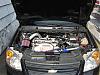


but onto some more info
with the stock pump (which only lasted a week on this setup brand new btw) I was seeing a water temp increase of 15 degrees compared to inlet temps (before cores after cores) new pump maybe see 6 degrees, iat's decreased a decent amount along with system recovery time back to ambient fluid temps.
soon comes the fun test of below ambient fluid temps
but I would add that this pump would be way overkill on a stock h.e. non dual pass setup
with the stock pump (which only lasted a week on this setup brand new btw) I was seeing a water temp increase of 15 degrees compared to inlet temps (before cores after cores) new pump maybe see 6 degrees, iat's decreased a decent amount along with system recovery time back to ambient fluid temps.
soon comes the fun test of below ambient fluid temps
but I would add that this pump would be way overkill on a stock h.e. non dual pass setup
As far as equations, it's not that simple. Equations with what numbers? As a "general rule of thumb" with even a modest understanding of physics, flow rate has zero impact on heat transfer rate. It's all about delta temp.
If this is a simple middle school project why do you keep getting an F when you talk about the subject.
You said earlier the greater the delta between the fluid and the air will transfer heat faster. That statement proves my point. If you have a pump that flows fluid slowly through the intercooler it will cause the fluid to heat up. As this fluid heats up it loses its abilty to pull heat as fast as it could when it first entered the intercooler.
Q: Why do people run a dual pass endplate vs a stock one?
A: The fresh cold fluid spends less time in the intercooler keeping the delta between the air and the fluid as high as possible pulling the most heat possible out of the charge.
If we run a high flow pump it helps to keep the fluid from heating up. This keeps the delta between the fluid and air as great as possible and therefore allows more heat transfer to take place.
You said earlier the greater the delta between the fluid and the air will transfer heat faster. That statement proves my point. If you have a pump that flows fluid slowly through the intercooler it will cause the fluid to heat up. As this fluid heats up it loses its abilty to pull heat as fast as it could when it first entered the intercooler.
Q: Why do people run a dual pass endplate vs a stock one?
A: The fresh cold fluid spends less time in the intercooler keeping the delta between the air and the fluid as high as possible pulling the most heat possible out of the charge.
If we run a high flow pump it helps to keep the fluid from heating up. This keeps the delta between the fluid and air as great as possible and therefore allows more heat transfer to take place.
2x the core coverage of the best delta temp.
Allot your same reasoning to the front HE and maybe you'll see the huge flaw in your logic. Open your damn eyes and look at the whole system.
but onto some more info
with the stock pump (which only lasted a week on this setup brand new btw) I was seeing a water temp increase of 15 degrees compared to inlet temps (before cores after cores) new pump maybe see 6 degrees, iat's decreased a decent amount along with system recovery time back to ambient fluid temps.
soon comes the fun test of below ambient fluid temps
but I would add that this pump would be way overkill on a stock h.e. non dual pass setup
with the stock pump (which only lasted a week on this setup brand new btw) I was seeing a water temp increase of 15 degrees compared to inlet temps (before cores after cores) new pump maybe see 6 degrees, iat's decreased a decent amount along with system recovery time back to ambient fluid temps.
soon comes the fun test of below ambient fluid temps
but I would add that this pump would be way overkill on a stock h.e. non dual pass setup
Exactly. Flow would likely be so great that your approach a constant temp, cutting best transfer rate.

simple terms.
If the pump flows too much you run the risk of pushing warm coolant through the heat exchanger before it a chance to have the heat "pulled" from it. the system, in turn, is just circulating warm coolant with minimal heat extraction. obviously some heat is pulled, but not as much as could/should be. If you take the opposite into consideration, too little flow and you don't circulate enough coolant to effectively cool the air charge. There needs to be a balance somewhere in the middle
When you are running a complex setup with multiple heat exchangers, even though the coolant is traveling at a faster pace, it spends more time in a heat exchanger.
Again, there needs to be a balance of all the different variables. Too small of a pump with too complex of a cooling system will putt too much stress on the pump and the system won't function properly. Too big of a pump with minimal cooling "mods" and you run the risk of inefficient heat extraction
Obviously this was already stated, just tried to sum it up in simple terms. There is a lot more that goes into it, but this is just in regards to the bigger pump=better argument
another, even more simple example:
you have a refrigerated tunnel, and a warm can of soda. if you have a major league pitcher (higher flow pump) throw the can through the tunnel, you are going to get your soda fast, but it will still be very warm.
if you rolled the can through the same tunnel with a gentle push, its going to take longer to get your soda, but it will be much cooler
If the pump flows too much you run the risk of pushing warm coolant through the heat exchanger before it a chance to have the heat "pulled" from it. the system, in turn, is just circulating warm coolant with minimal heat extraction. obviously some heat is pulled, but not as much as could/should be. If you take the opposite into consideration, too little flow and you don't circulate enough coolant to effectively cool the air charge. There needs to be a balance somewhere in the middle
When you are running a complex setup with multiple heat exchangers, even though the coolant is traveling at a faster pace, it spends more time in a heat exchanger.
Again, there needs to be a balance of all the different variables. Too small of a pump with too complex of a cooling system will putt too much stress on the pump and the system won't function properly. Too big of a pump with minimal cooling "mods" and you run the risk of inefficient heat extraction
Obviously this was already stated, just tried to sum it up in simple terms. There is a lot more that goes into it, but this is just in regards to the bigger pump=better argument
another, even more simple example:
you have a refrigerated tunnel, and a warm can of soda. if you have a major league pitcher (higher flow pump) throw the can through the tunnel, you are going to get your soda fast, but it will still be very warm.
if you rolled the can through the same tunnel with a gentle push, its going to take longer to get your soda, but it will be much cooler
Senior Member
Joined: 03-07-06
Posts: 942
Likes: 0
From: Nassau County Long Island NY
simple terms.
If the pump flows too much you run the risk of pushing warm coolant through the heat exchanger before it a chance to have the heat "pulled" from it. the system, in turn, is just circulating warm coolant with minimal heat extraction. obviously some heat is pulled, but not as much as could/should be. If you take the opposite into consideration, too little flow and you don't circulate enough coolant to effectively cool the air charge. There needs to be a balance somewhere in the middle
When you are running a complex setup with multiple heat exchangers, even though the coolant is traveling at a faster pace, it spends more time in a heat exchanger.
Again, there needs to be a balance of all the different variables. Too small of a pump with too complex of a cooling system will putt too much stress on the pump and the system won't function properly. Too big of a pump with minimal cooling "mods" and you run the risk of inefficient heat extraction
Obviously this was already stated, just tried to sum it up in simple terms. There is a lot more that goes into it, but this is just in regards to the bigger pump=better argument
another, even more simple example:
you have a refrigerated tunnel, and a warm can of soda. if you have a major league pitcher (higher flow pump) throw the can through the tunnel, you are going to get your soda fast, but it will still be very warm.
if you rolled the can through the same tunnel with a gentle push, its going to take longer to get your soda, but it will be much cooler
If the pump flows too much you run the risk of pushing warm coolant through the heat exchanger before it a chance to have the heat "pulled" from it. the system, in turn, is just circulating warm coolant with minimal heat extraction. obviously some heat is pulled, but not as much as could/should be. If you take the opposite into consideration, too little flow and you don't circulate enough coolant to effectively cool the air charge. There needs to be a balance somewhere in the middle
When you are running a complex setup with multiple heat exchangers, even though the coolant is traveling at a faster pace, it spends more time in a heat exchanger.
Again, there needs to be a balance of all the different variables. Too small of a pump with too complex of a cooling system will putt too much stress on the pump and the system won't function properly. Too big of a pump with minimal cooling "mods" and you run the risk of inefficient heat extraction
Obviously this was already stated, just tried to sum it up in simple terms. There is a lot more that goes into it, but this is just in regards to the bigger pump=better argument
another, even more simple example:
you have a refrigerated tunnel, and a warm can of soda. if you have a major league pitcher (higher flow pump) throw the can through the tunnel, you are going to get your soda fast, but it will still be very warm.
if you rolled the can through the same tunnel with a gentle push, its going to take longer to get your soda, but it will be much cooler
Senior Member
Joined: 03-07-06
Posts: 942
Likes: 0
From: Nassau County Long Island NY
You still dont get it

Senior Member
Joined: 03-07-06
Posts: 942
Likes: 0
From: Nassau County Long Island NY
It has nothing to do with being tough. I'm saying you're wrong because you're wrong.


Senior Member
Joined: 03-07-06
Posts: 942
Likes: 0
From: Nassau County Long Island NY

Wow this thread has gone off topic. Let's talk about all of those heat exchangers. I think you may have too many in the system. You can only pull so much heat out of the incoming air with the laminovas.
This is another valid point, at what point does having more and more heat exchangers become a moot point because the laminovas have already hit their peak limit of cooling capacity.